
Context
This week, I spent my time creating radio sweepers for our one hour radio show, The becnhwarmeds. The aim was to create a collection of short and engaging pieces of radio imagaing that could be used to introduce and remind people about the show.
The target audience is primarily listeners interested in sports, entertainment and energetic radio content. I wanted the sweepers to appeal to this audience through their pacing, sound design and delivery, while remaining clear enough for listeners to recognise the show.
I created the sweepers using Adobe Audition 2026, working with voice recordings, music beds, sound effects and different audio effects. I also organised my sound library so that I could find suitable audio elements quickly when building each sweeper.
Research
Technical
For this project, I used Adobe Audition 2026 because it provides the tools needed to edit, process and layer audio. As the sweepers needed to sound punchy and professionally produced, I experimented with different effects to improve the quality of the voice recordings and give them more character.
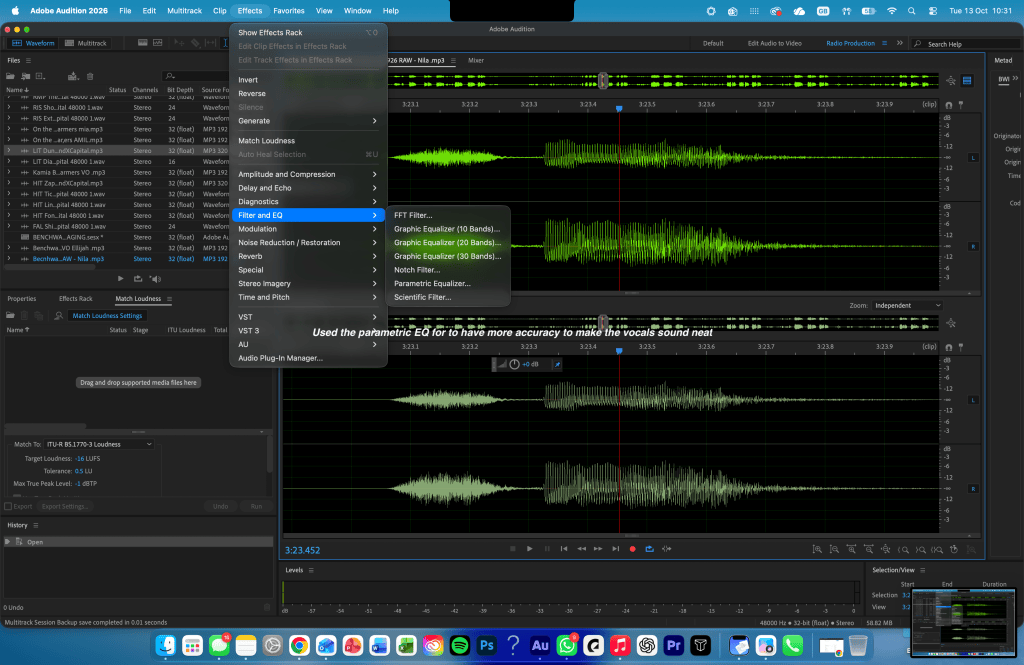
One of the main techniques I used was parametric EQ. This allowed me to adjust the frequency balance of the vocals and make them sound cleaner and more defined. Rather than leaving the recordings completely unprocessed, I used EQ to help the voice sit more effectively within the overall sound of each sweeper.
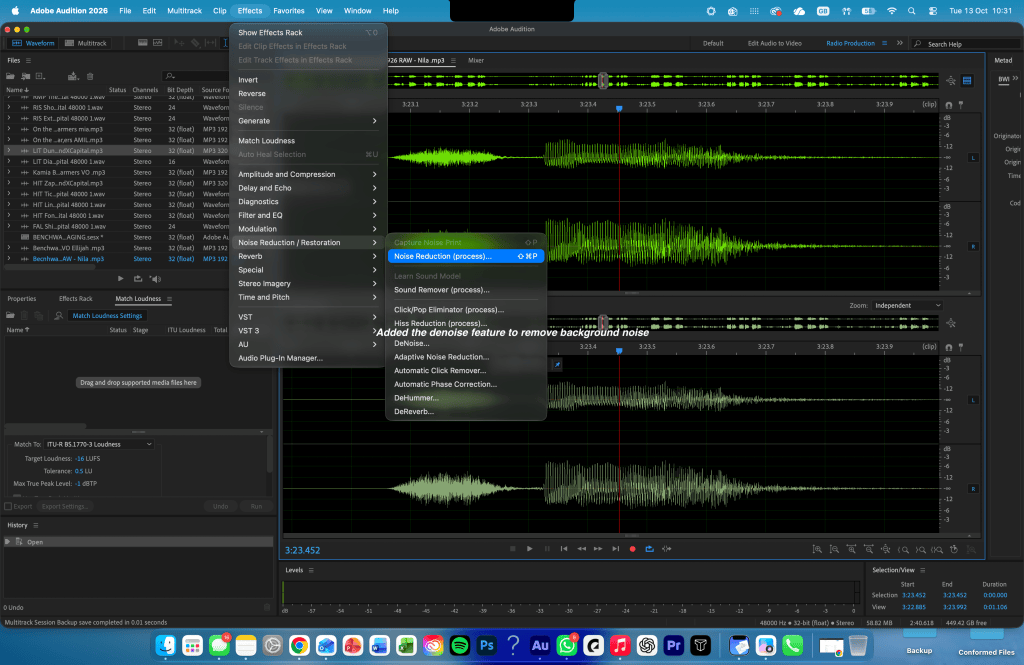
I also experimented with noise reduction to remove unwanted background noise from the recordings. This was important because I wanted the vocals to sound clean and clear, particularly when layered with music and sound effects.
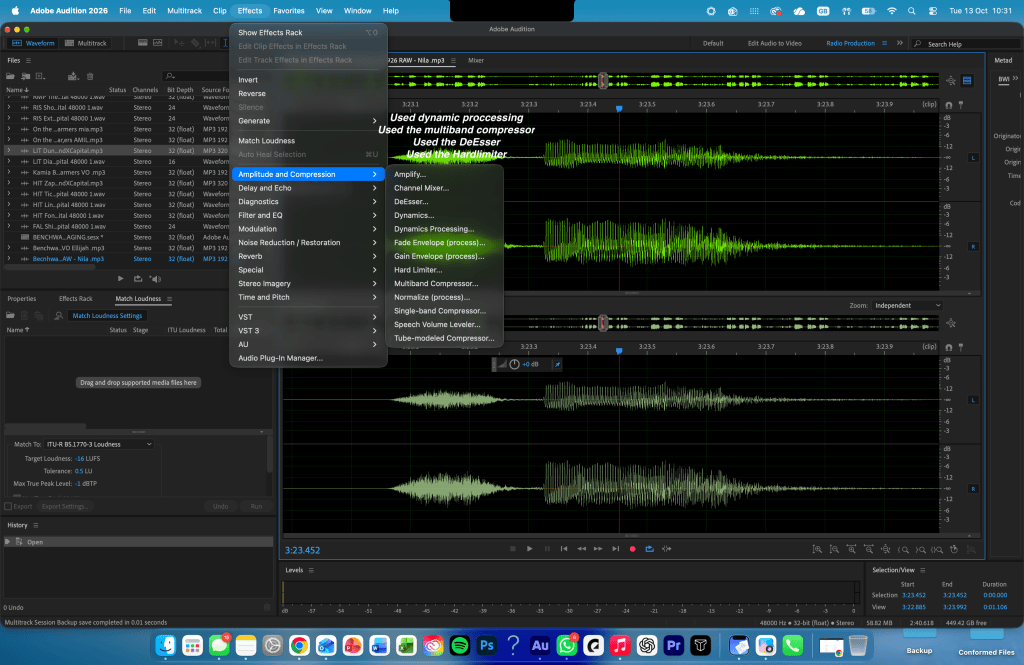
Another part of the process involved using dynamic processing. I experimented with tools including the DeEsser, Multiband Compressor, Dynamics Processing and Hard Limiter. These effects helped me control the vocal dynamics, reduce harsh sibilance and create a more consistent sound. The Hard Limiter was particularly useful for controlling peaks and preventing the audio from becoming excessively loud.


Story
Stylistic
Stylistically, I wanted The Benchwarmers to have an energetic, modern sports-radio sound.
I experimented with layering vocal recordings alongside music beds, impacts and other sound effects. The aim was to make the sweepers feel engaging from the beginning, without allowing the additional sounds to overpower the voice.
Problem Solving
Problem: The sweepers needed to sound energetic and professional without making the vocals difficult to understand.
Solution: I experimented with parametric EQ, noise reduction and dynamic processing to improve the clarity and consistency of the recordings. I also considered how the music and sound effects interacted with the vocals, making sure that the spoken words remained the main focus.
Problem: Using the same style of sweeper repeatedly could make the show’s imaging sound repetitive.
Solution: I created different variations using alternative vocal deliveries, sound effects and music beds. This gave me more options when deciding which imaging to use throughout the hour and helped establish a more varied identity for The Benchwarmers.
Problem: Finding suitable music beds and sound effects could become time-consuming when working on multiple sweepers.
Solution: I organised my resources into separate beds and imaging folders. This made it easier to find suitable audio elements and helped me maintain a more efficient workflow.
Evaluation and Reflection
What Went Well (WWW)
I think one of the main successes this week was creating a variety of sweepers for The Benchwarmers rather than relying on a single piece of imaging. This gave the show a stronger identity and provided different options that could be used throughout the hour.
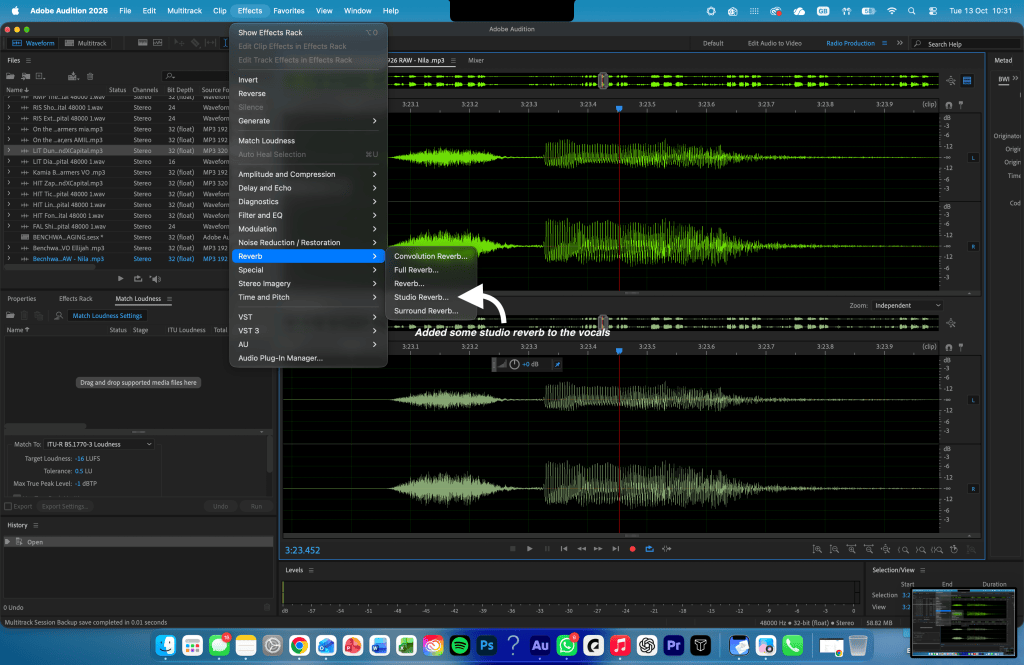
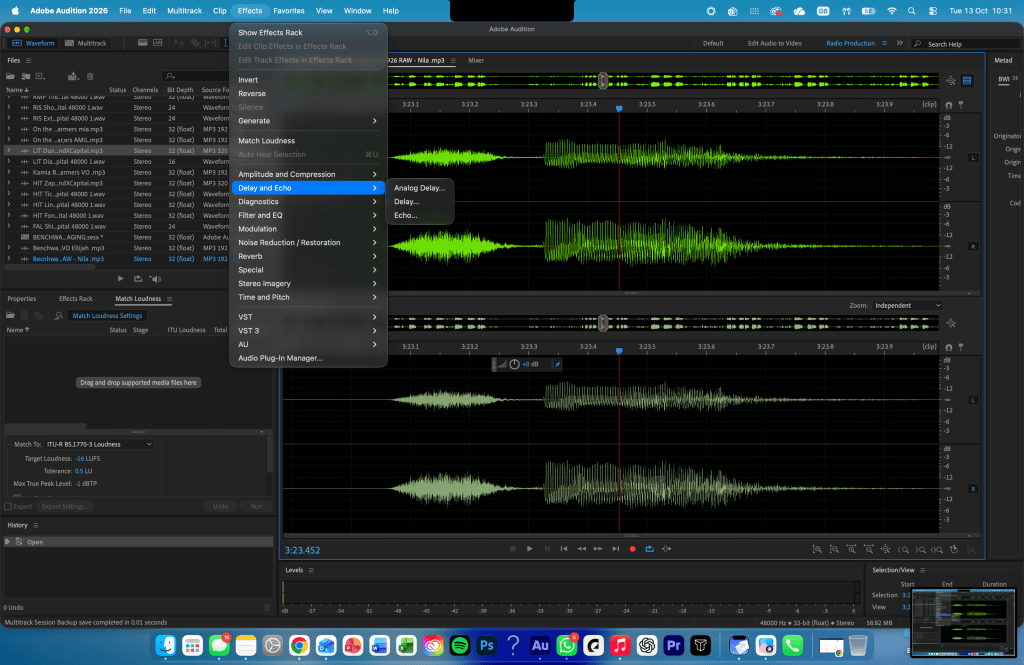
I also developed my understanding of vocal processing in Adobe Audition. Experimenting with parametric EQ, noise reduction, dynamic processing, reverb and delay helped me understand how different effects can change the character of a recording. I was able to consider not only whether an effect sounded interesting, but also whether it improved the overall quality of the sweeper.
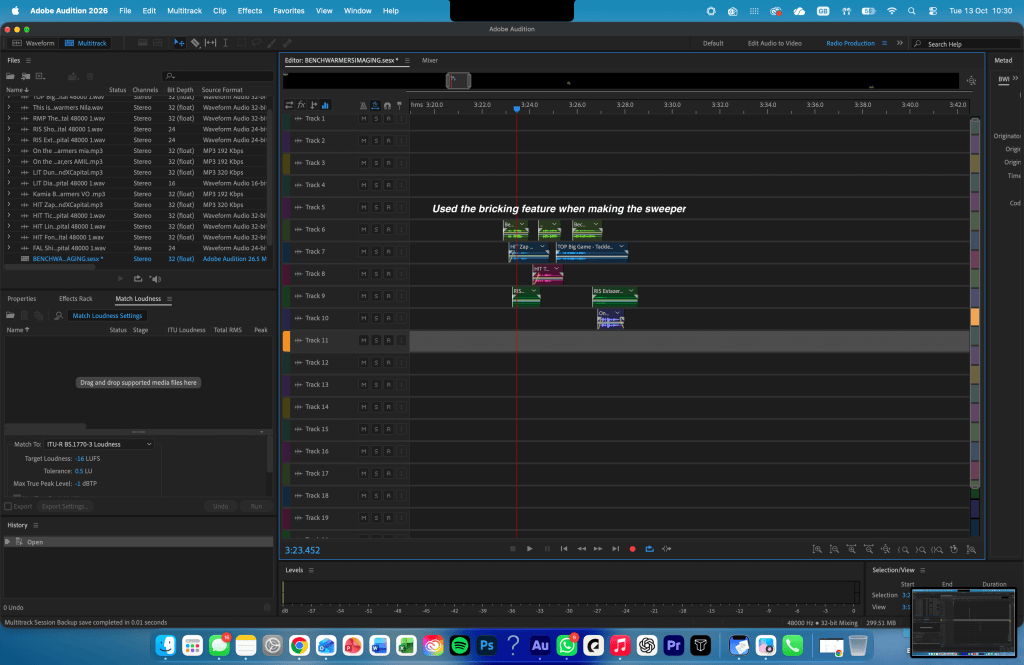
Another positive was my use of multitrack editing. By arranging different audio elements across multiple tracks, I could build up the sweepers and experiment with how the vocals interacted with the music and sound effects. This gave me more creative control than simply editing a single audio file.
Even Better If (EBI)
I could improve the project by developing a more consistent sound across all the sweepers. Although having different styles is important, I could establish a more recognisable audio signature through recurring sound effects, vocal treatments or musical elements.
I could also experiment further with transitions between the vocals and sound effects. More precise timing and layering could make some of the sweepers feel tighter and more impactful, particularly when using shorter, energetic radio IDs.
Another area for improvement would be to compare the different versions in the context of the actual radio show. Listening to them individually is useful, but hearing them between presenter links and other programme content would help me understand whether they work effectively in a real broadcast environment.


