
Academic theory and nostalgia studies
These sources help define nostalgia properly and give your FMP a stronger academic base. They are especially useful for the rationale, contextual review and written analysis sections.
Core theory: nostalgia and memory
| Source | Why it helps | Link |
| Newman, D.B., Sachs, M.E., Stone, A.A. and Schwarz, N. (2020) Nostalgia and Well-Being in Daily Life: An Ecological Validity Perspective | Useful for explaining how nostalgia can support social connectedness, self-continuity and well-being. | Open source |
| FioRito, T.A. and Routledge, C. (2020) Is Nostalgia a Past or Future-Oriented Experience? Affective, Behavioral, Social Cognitive, and Neuroscientific Evidence | Strong source for the argument that nostalgia is not only reflective but also motivational and future-facing. | Open source |
| Hagedoorn, B. (ed.) (2018) The Past in Visual Culture: Essays on Memory, Nostalgia and the Media | Useful for placing your project within wider debates about memory, archives and media forms. | Open source |
Digital memory and online culture
| Source | Why it helps | Link |
| Hutmacher, F. et al. (2024) Understanding Autobiographical Memory in the Digital Age | Directly relevant to how digital platforms shape remembrance, self-documentation and recall. | Open source |
| Wang, Q. (2022) Memory online: introduction to the special issue | A concise entry point into how the internet and social media influence remembering. | Open source |
| Hou, Y. et al. (2022) Remembering online and offline: the effects of retrieval context on autobiographical memory | Useful if you want to compare remembering in conversation versus remembering through digital traces. | Open source |
British screen culture and nostalgia
| Source | Why it helps | Link |
| Sobande, F. (2024) Black media nostalgia in Britain | Useful for broadening the project beyond generic nostalgia into identity, race and lived cultural memory. | Open source |
| BFI (2016/2017) Cinephilia down the ages: a Museum of the Everyday | Supports discussion of fan memory, cinema-going habits and everyday media remembrance. | Open source |
| BFI (2022) The pattern under the plough: the old, weird Britain on film | Useful for linking nostalgia to British film history, place, ritual and national identity. | Open source |
Case study: Back in the Dayz podcast
| Source | Why it helps | Link |
| Spotify (2025-2026) Back In The Dayz with Stevo the Madman | Primary platform source for your case study podcast. | Open source |
| YouTube / STMM Network (2025-2026) BACK IN THE DAYZ PODCAST playlist | Useful as evidence of the show’s episode range, visual branding and guest-led nostalgia format. | Open source |
| Acast (2025-2026) Back In The Dayz with Stevo the Madman feed | Good platform evidence for episode summaries, distribution details and branding. | Open source |
| Instagram (2026) @backinthedayzpod | Useful for marketing, branding, audience engagement and transmedia extension. | Open source |
Target Audience
Audience Profile
Core Target Audience
The primary target audience will consist of young people aged between 16 and 25 years, with the secondary audience being people aged 26-35 years. The audience members should have a strong interest in media, nostalgia, music, and podcast culture. This group will also be digitally active and culturally aware. They must enjoy discussing how past experiences, trends, and memories influence the present-day culture.
Demographic Profile
Age: 16–25, with a secondary audience aged 26–35
Gender: Will have a male skew towards it however not majorly
Location: Mainly based in the United Kingdom, with a strong urban presence
Education / Lifestyle: Youngsters, creative individuals, podcast listeners, media lovers, and culture aficionados.
Psychographic Profile
They enjoy hearing nostalgic content.
They have a liking towards podcasts, documentaries, and other media discussions.
They enjoy listening to media that feels authentic and culturally relevant.
They are keen to learn how past influences the present day’s trends and activities.
They appreciate hearing true stories as opposed to fabricated ones.
Audience Interests
- Podcasts such as Back in the Dayz
- Nostalgia-related social media content
- Discussions relating to old music, television, games, fashions and past lifestyles.
- Documentaries that delve into societal, media, and cultural themes.
Media Habits
- Podcasts, videos, documentaries on Spotify, YouTube, Apple Podcasts, TikTok, and Instagram.
- Viewing short clips before moving on to complete podcast or documentary episodes.
- Listening while commuting, travelling, and taking a rest.
- They favour media that is engaging, accessible, personality-driven, and entertaining.
Why this audience fits the project
These are the perfect audience members for this project because it covers all of the interests noted above. At the same time, the involvement of the Back in the Dayz podcast makes it even more realistic, providing the opportunity for audience members to hear reflections of those connected with the subject matter in question.
Release Strategy
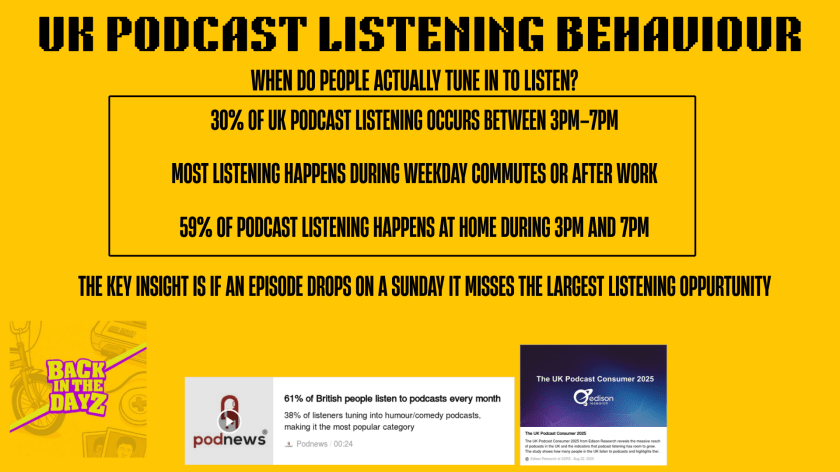
Research suggests that 30% of the UK population, who listen to podcasts, tune in between 3pm and 7pm, so this is rush hour time coming home and to work.
Most listening also occurs during weekday commutes to and from work.
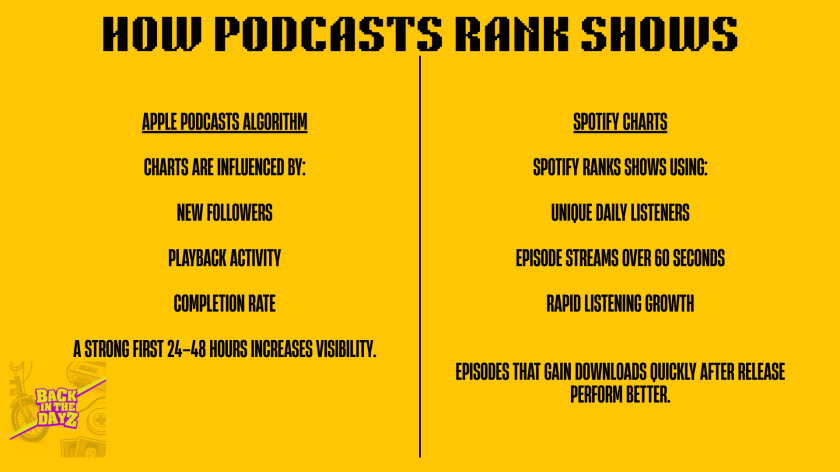
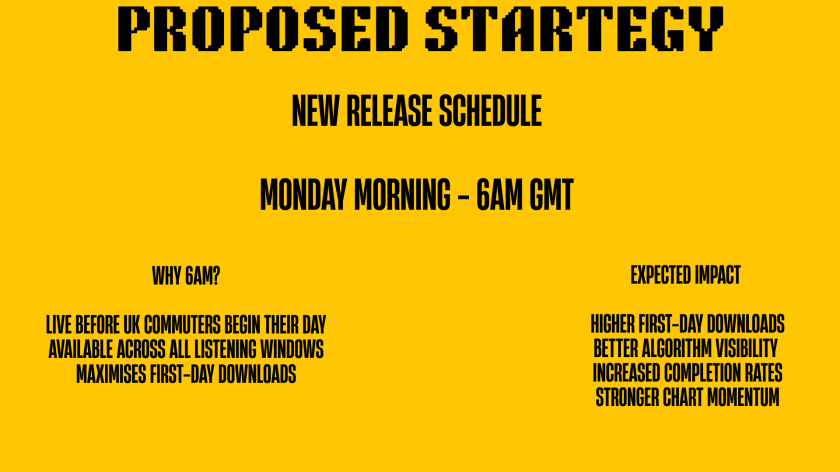
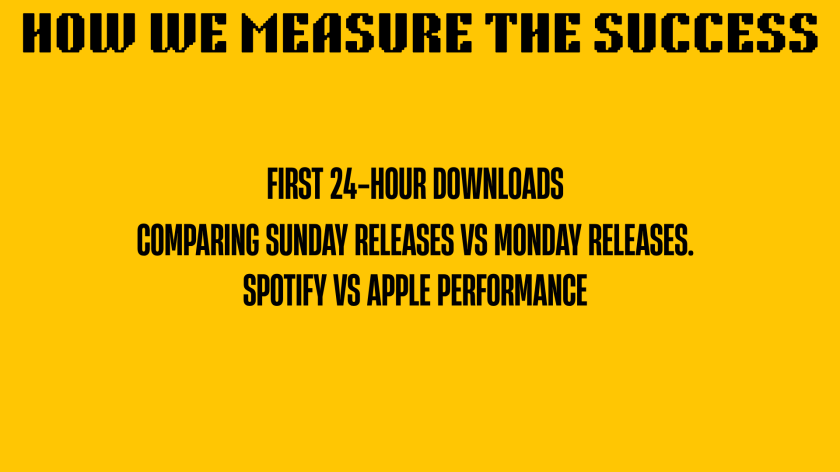
Below is a slideshow detailing the release strategy in full detail:

Story Research
Case Study: Back in the Dayz
The Back in the Dayz podcast hosted by Stevo the Madman is an important case study for this project, considering the podcast relies entirely on the concept of memory, nostalgia, and reflections of collective culture.
In the podcast description, it describes the episode as “a trip down memory lane”. Some annotated screenshots are provided below to give a better understanding of the literal form of the podcast.
This makes this podcast very relatable to the proposed target audience, as the podcast allows members to relive music, entertainment, and past experiences in a relatable manner. By basing my case study on Back in the Dayz, I am able to understand how the podcast attracted daily listeners who already enjoy podcasts.
By using Back in the Dayz as a case study, I can research how nostalgia-led conversations can attract daily active listeners who already consume podcasts.
This helps me shape Echoes of Then in a way that suits my intended audience, who are more likely to respond to authentic voices, familiar references and personality-led discussions rather than formal academic delivery.
Music History
The guardians history of UK Garage traces the genres origins to radio stations in East London in the early 1990s naming, Craig David and So Solid Crew, as break thrugh atrists. I will use this origin story for the foundations of my first episode to explain the feelings of nostalgia.
Along side there some more research within the music culture, and all about looking back is a recent sit down with British Rap producer mainly for JHus being, JAE5, recently releasing his breakdown on an iconic rap song for JHUS being, Did you see,
Offical Charts Data
The official charts reported a Daniel Bengfield song number one on the top 100 in January of 2002, 2002 is the range of my primairy audience. This is shown, here
RAJAR Podcast Listening Data
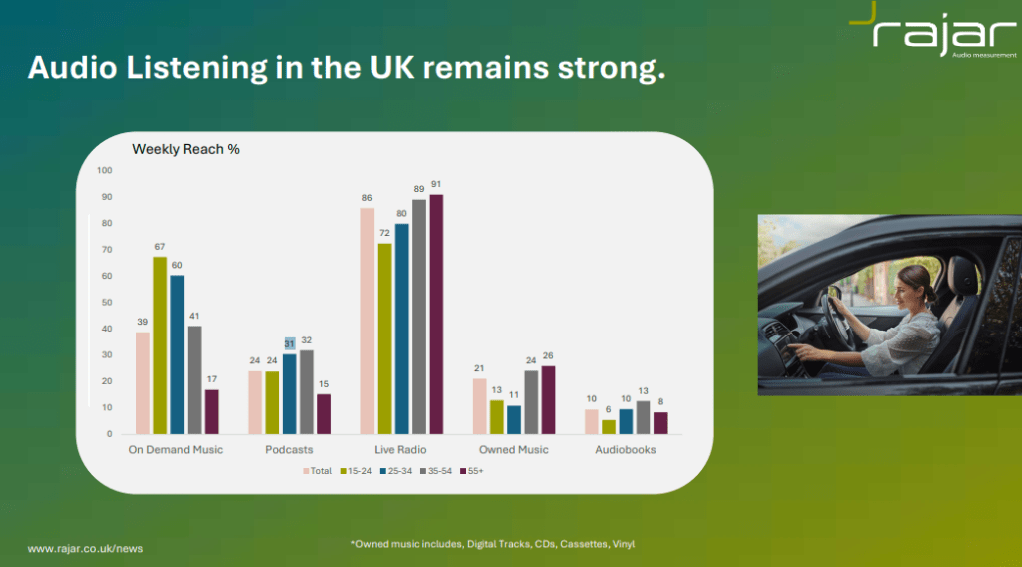
Rajar reports that 31% of 25-34 year olds listen to podcasts per week and 24% of 15-24 year olds listen to podcasts weekly in the uk. This relates to me as I will be using this data to target my specifc audiences which are between those age ranges within my documentary series.
Form and Style (Stylistic Research)
What makes a good audio documentary?
A good audio documentary is made by making sure to keep the listener engaged at all times. This is done by making sure to start the first 30 seconds with an exciting moment, a moment that is retained in memory, and then after that, every 5-10 minutes, have something that keeps the audience engaged, like a funny comment. The goal is to keep the audience engaged at all times with the conversation still flowing.
This is important as my target audience consumes a high amount of streamed audio, podcasts and digital media. This means that the style of my project should feel modern and personality-led while being structured like a documentary. I want the documentaries to combine narration, interview material and reflection in a way that matches the listening habits of this audience.
BBC Academy and Transom have been very useful, as they give guidance on how stories are told using sound, structure and storytelling to hold attention.
It will be good as well to base my style around the Back in the Dayz podcast, such as the tape recorder at the beginning of each episode, followed by a funny moment from the episode; it will be good to maintain engagement, and the old tape recorder sound effect and the Street Fighter “3…2…1 fight” as well will have a link back to nostalgia as well.
An MP3 attachment is listed below for reference.
This is also coupled with previous audio documentaries that I have completed as well, using that level of sound design. Especially with the intro too. All sound FX from those productions were collected from Epidemic Sound.
I will also be trying to emulate the same story structure as the podcast link below, the story of nike in football, which does bring out a nostalgic energy with it. As it is talking about the past enviorment
Technical (Hardware/Software) Research
As part of my research it is better to consider the hardware and the software that will be available to me to make sure I have the correct equipment for the task at hand.
The hardware available to me is the recording booth fitted with soundproofing and an Audio-Technica microphone, which is excellent for recording, and it will be recorded on Adobe Audition, which is crowned for its simplicity yet how much functionality it has.
I will also be using my MacBook Pro M2 to edit the audio and add all of my sound design features.
Different Microphone options
| Microphone | Why its good | Link |
| Rode Pod Mic | The rode pod mic is good as it is good as a budget option, compact in size and records within a tight frequency range which makes it good in untreated enviorments. | Open source |
| Audio-Technica AT2040 | The AT2040 has different features that minimize background noise as much as possible. It is very beginner friendly | Open source |
| Shure MV7 | This mic is great as you can record low res and high res audio at the same time, The application on your mobile device makes it great for on the go recording too. However it is not that budget friendly | Open source |
| Shure SM7B | The SM7B is more of the well known micorphones, it records at a wide frequency range so it makes it great for recording in a treated enviorment, however it is not that budget friendly like the one before it which is a let down. | Open source |
The specific microphone I have at my disposal is the Audio Technica AT2020; which has a wide frequency range which will give a more detailed sound within a sound-treated environment. I will use the AT2020, as it is the budget-friendly option, and it will still perform well in a sound-treated environment.
Different Audio Editing Software Options
| Software | Why its good | Link |
| Adobe Auditon | Industry Standard for podcasting and spoken word wditing, very strong at multitrack editing. Very clean workflow. | Open source |
| Audiacity | Audacity is free and easy to access, it is also VERY beginner friendly. It has a simple interface for recording and editing | Open source |
| Logic Pro | Logic has very good sound quality, it is very music focused, however its high one time payment does not make it appealing to me. But is is fully optimised for Mac systems | Open source |
| Pro Tools | Professional industry standard software, is quite music focused however vocal editing is also very good. It is extremly powerful in its editing capabilities. | Open source |
I have chosen to use Adobe auditon for its strong multitrack option further more also the ability to edit single waveforms as well. Its a proffessional standard tool as well.
Different Mixing Desk Options
| Mixing Desk | Why its good | Link |
| Studer | Syuder is industry standard used in professional radio enviroments with clean preamps, mainly designed for live radio workflows. | Open source |
| Yamaha | Yamaha is very reliable and has strong audio quality and versitale functionality for live sound. | Open source |
| Allen & Heath | Strong EQ sections and professional build qualit. Very popular in live sound and radio production | Open source |
| Solid State Logic | Legacy studio console. Also has extremly high end audio qualiry and professional routing. Used in music, film and different industries. | Open source |
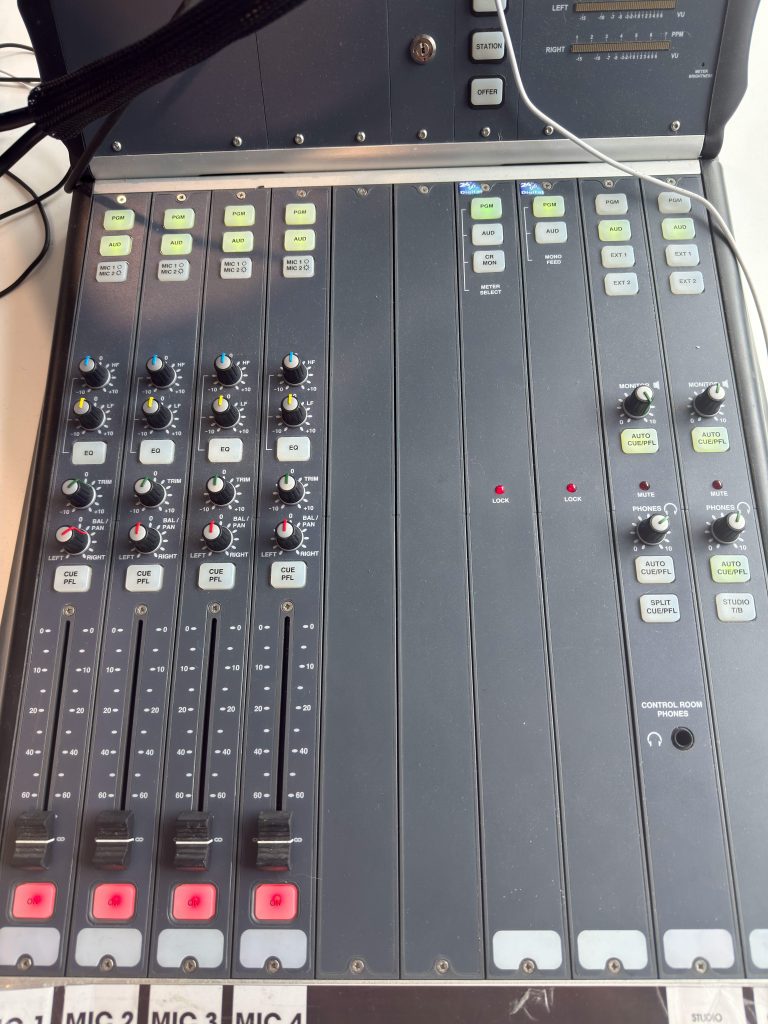
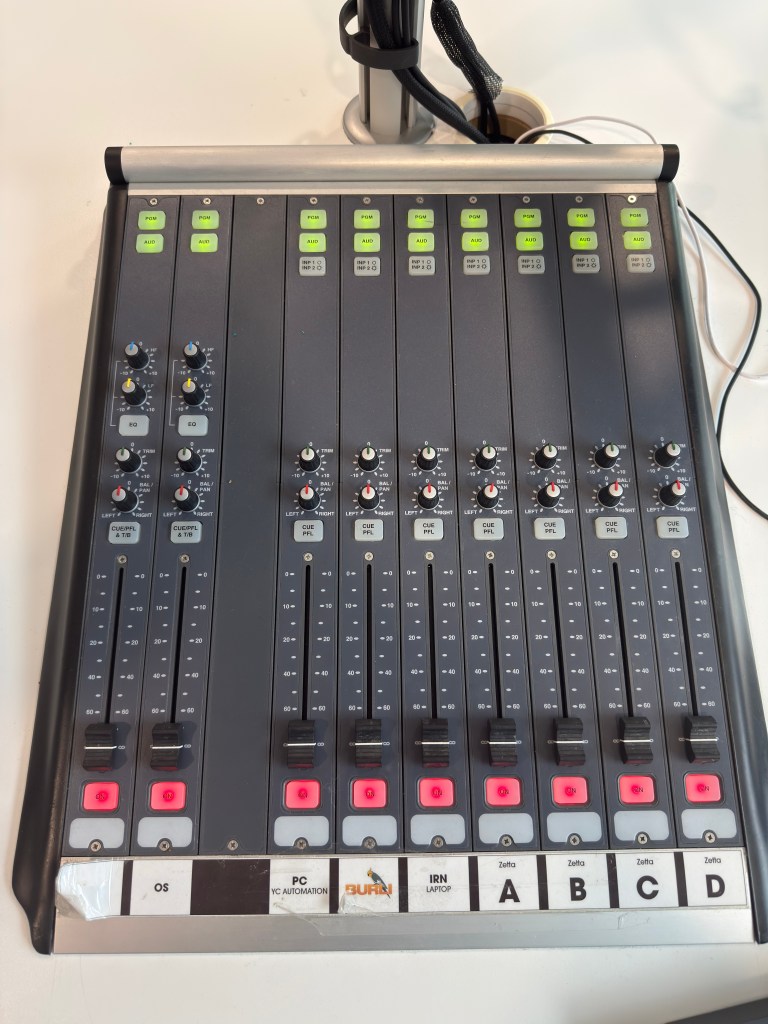
For the mixing desk I have chosen to use the one in the image below, Sonifex S2, as its very simple to use and I can still edit and alter my vocals live while recording if needed.
 Imad Daili - Sports Media