
Introduction
For the final major project, whcih I will be referring too as FMP for the rest of this evaluation. I created a 3 part audio documentary series titled Echoes of Then, and a stand alone sports focused episode for my running series, The playbook, titled, “Broken Bodies.” For Echoes of Then I wanted to explore the feelings of nostalgia and how memories of the past continue to influence modern media, audiences and culture today. For broken bodies I tried to answer one simple question.
Why do sports players keep coming back after a “carreer ending” injury?
Across both of the series they follow the same foundations, moving beyond nostalgia simply being viwed as a comforting feeling, rather to see how it’s repackaged within modern media and how constant reflection on the past can impact originallity and culture moving forward..
The project had a primary audience of people aged 16-24 years old with a secondary audience of 26-36 year olds, as per my research these audiences are on podcasts according to RAJAR podcast data and they are heavily connected to digital culture, music and social media and modern podcast content. My aim was to also have the episodes feel accessible while still maintaining a strong analytical side throughout all of the episodes.
The documentary series of, Echoes of Then, was heavily inspired by my previous audio documentary work on , The playbook, alongside the nostalgia based podcast, Back in the dayz with Stevo the Madman.
These are both linked below.
This is all coupled with the stylistic intentions, layered sound design and proffessional productions that another audio documentary, The story of Nike in football, used. Which is also linked below.
All of this to create an immersive and accessible audio documentary series.
This evaluation reflections on the overall success of the project comparing my origial intentions with the final out come evaluating the technical and creative decisions made throughout the production. Whilst also checking myself on my own work and looking how I could have improved, collecting peer data to see how I could improve on furture projects.
Part 1 – Intentions vs Outcome
My original intention for Echoes of Then was as said above to create a 3 part audio documentary series explaining how nostalgia and memories continue to influence modern meida. I wanted the documentary to feel immersive and cinematic at the same time rather than simply soundling like a spoken narration all of the way through with some background music. The project was aimed primarily at an audience of 16-24 year olds with a secondary audience of 25 – 36 year olds as these audiences are heavily connected to modern digital culture. I wanted the series to feel relatable and emotionally engaging wh also analusing how nostalgia is used and repackaged to tell a different story for different types of gain, in particulary monetary gain.
Looking at the finished product now, I believe the final outcome sucessfully achieved these overall intentions. One fo the strongest aspects of the project is the way each episode is developed, with its own distinct identiy while still connecting to the wider themes of memory. Episode one, why do we miss the past?, focused on the emotional warmth of nostalgia and and was intentionally designed to be calm and reflective. At the 1:25 min mark within the episode, the layred cassete clicks, VHS tape textures and the ambient music immediatley introduce the nostalgic energy I was attempting to show.
As the production progressed, the scoppe of the project changed creativley. Initally, I intended the series to remain calm and reflective however after reciveing feedback from my peers and teachers the main advice was to go deeper rather than look at the base of the feeling. This then went to scripting and editing episode 2, the project become much stronger when each episode had a different tone and atmosphere, which led to me creating, Repackaging the past. This episode was meant to reflect a much darker and a more aggressive tone, to feel much more like an accusation, designed to make the listnener themselves feel cornerd.
Using techniques like breaking the 4th wall in my script and darker music beds episode 2’s feedback really evoked that feeling. The opening of the episode at 1min 40 seconds the episode manipulates the listener by creating a false sense of security through the use of some calm jazz music which is interrupted with glitches, repeated dialogue and distorted sounds. This section became one of the strongest momenths within the documentary as the sound design reinforces the themes of manipulation and recycled media rather than relying on my script to represent that.
However, there are still areas where improvements could be made and it did fall short of my intentions , at 9 mins 31 seconds, the emotional impact of the ending is slightly wekeaned because the music bed underneath fades too subtly. on reflection the automation shouls have been more gradual and the music should have been mixed sightly louder to creaye a cinematic resolution. Furthermore, some of the scripting within the episode became repepetive in some places discssing media manipulation, which slightly reduces the impact of some ideas.
An improvment to this could be that I could have managed my time better to continue developing the project. Such as if I did I would focus on refining ym pacing, scripting and sound balancing. I would also experiment further with original Foley rather than relying on sources SFX. Although the final documentary feels professional made, more time would allow the project to feel more polished and technically controlled.
Part 2 – Technical Self Assessment
Technically my project demonstrates a strong level of audio prodcution wuality, particulary in relation to sound design, pacing and multitrack editing, throughout I used adobe audition which was the best one to use in comparision to other daws bevause of its multi track editing features. Using maultiple different sound FX and ambient textures.
These can be found in here, the practical skills section of this website.
With is a strong aspect of these documentaries the episodes have consistent vocals, this is coupled with my pacing whilst recording but in post production my vocal chain that I used to ensure a very high quality turn out in the edit. The vocal chain that I used for my self includes:
- DeNoise – Around 5-10% to remove any underlying background nosie
- DeEsser – This is to remove any sharp S’s sound effects that I might have made
- Parametric EQ – This is to level out my vocals to have a clean tone and make it feel more intimate.
- Dynamics Processing – Using the classic soft knee preset and editing it slightly to have a more dense vocal.
- Multi Band compressor – Using this to compress specifc frequencies of my vocals specifically giving me more accurarcy.
- Hard Limiter – The hard limiter limits the peaks of my audio ensuring no peaks
- Matching Loudness – I matched the loudness to -16 LUFS as that is the general broadcast form for streaming platforms.
Screenshots of this are shown below:
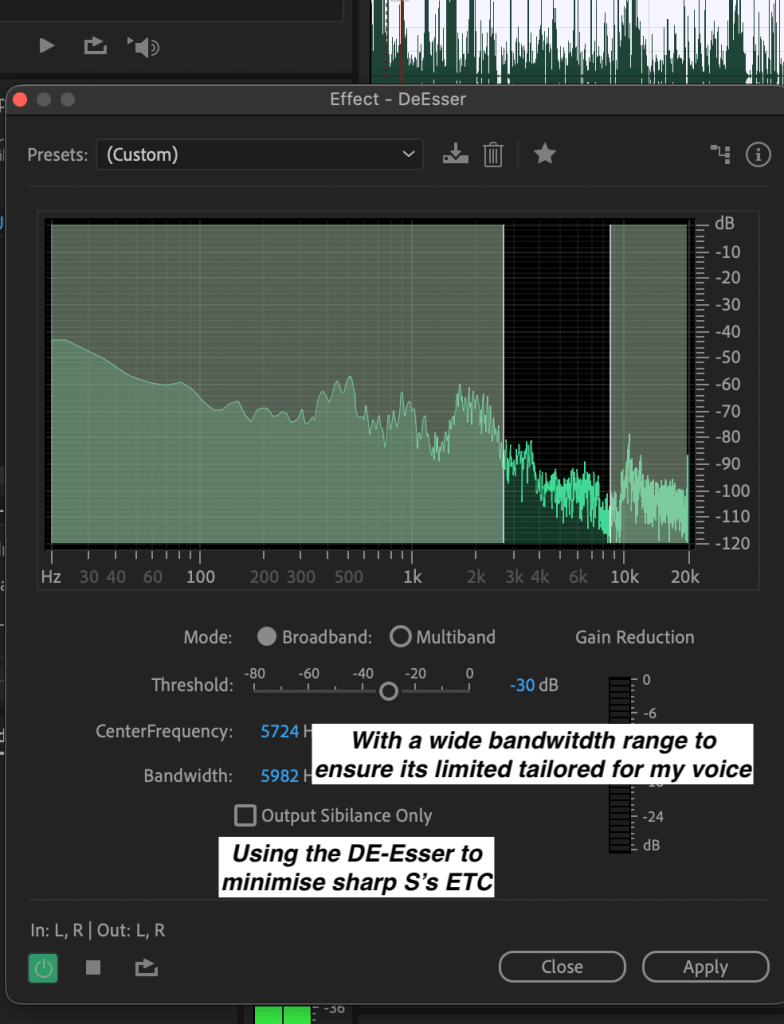
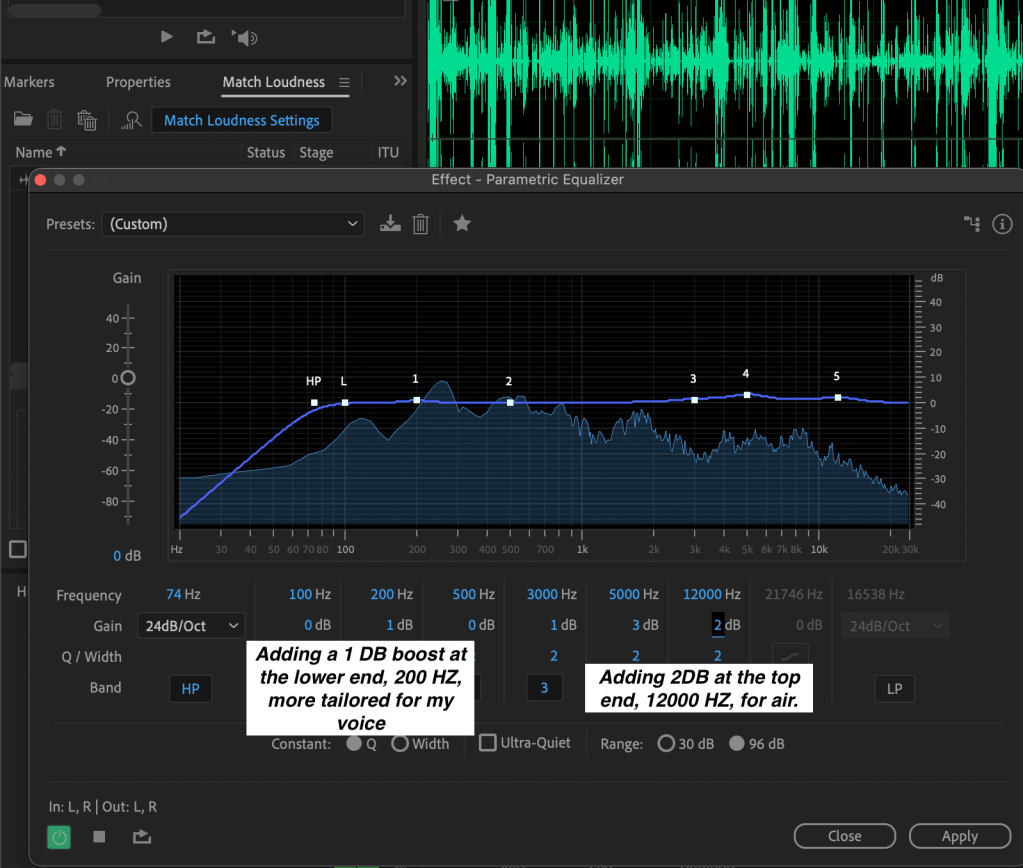
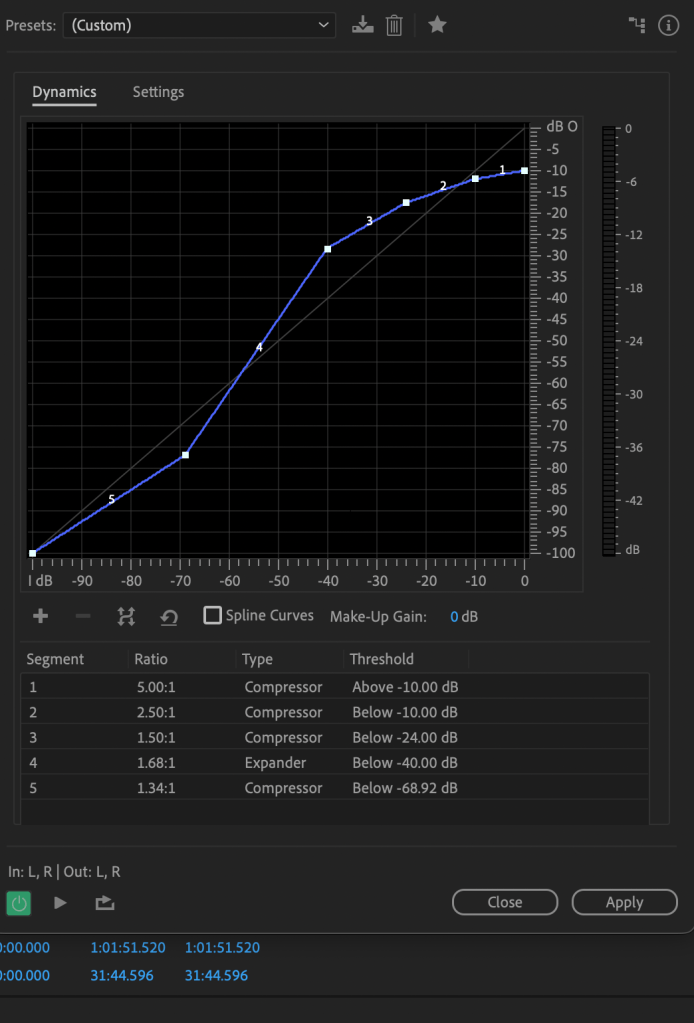
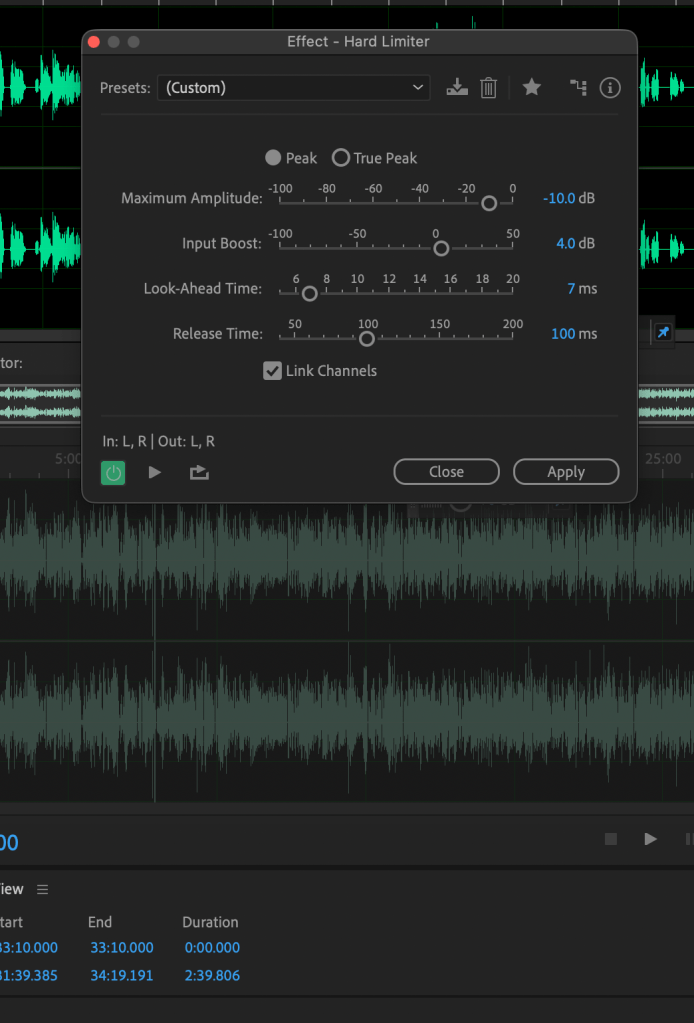
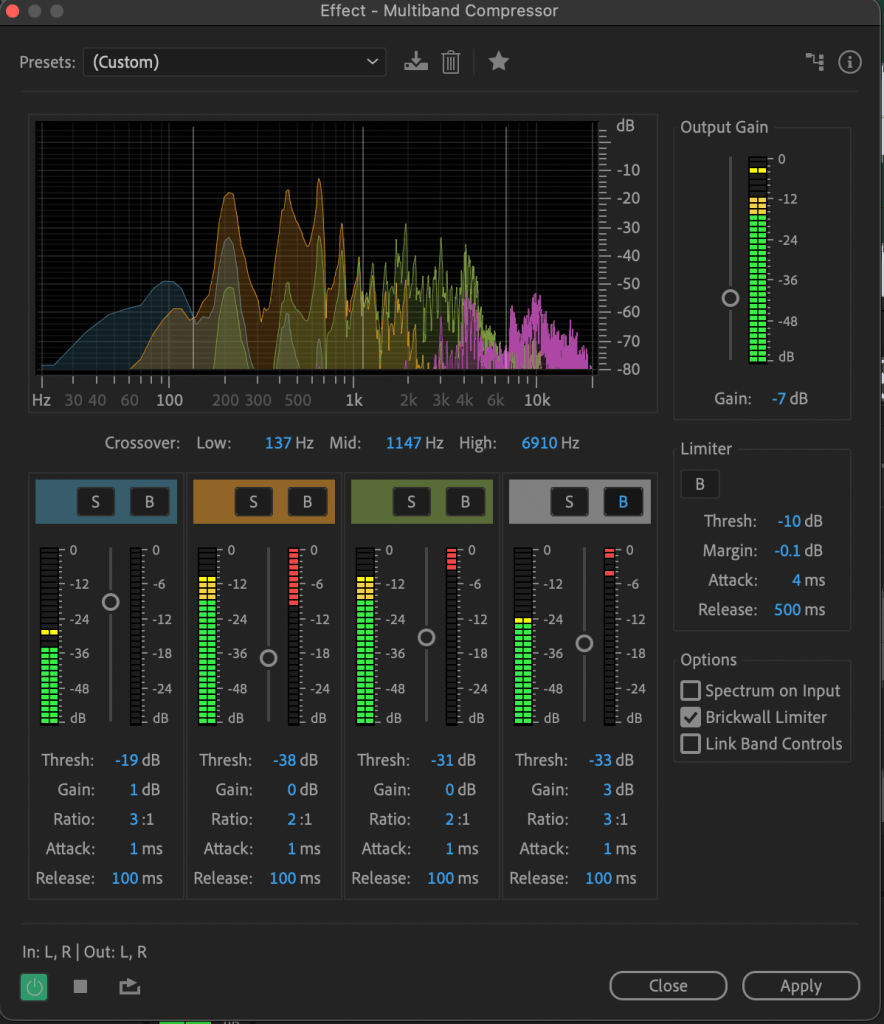
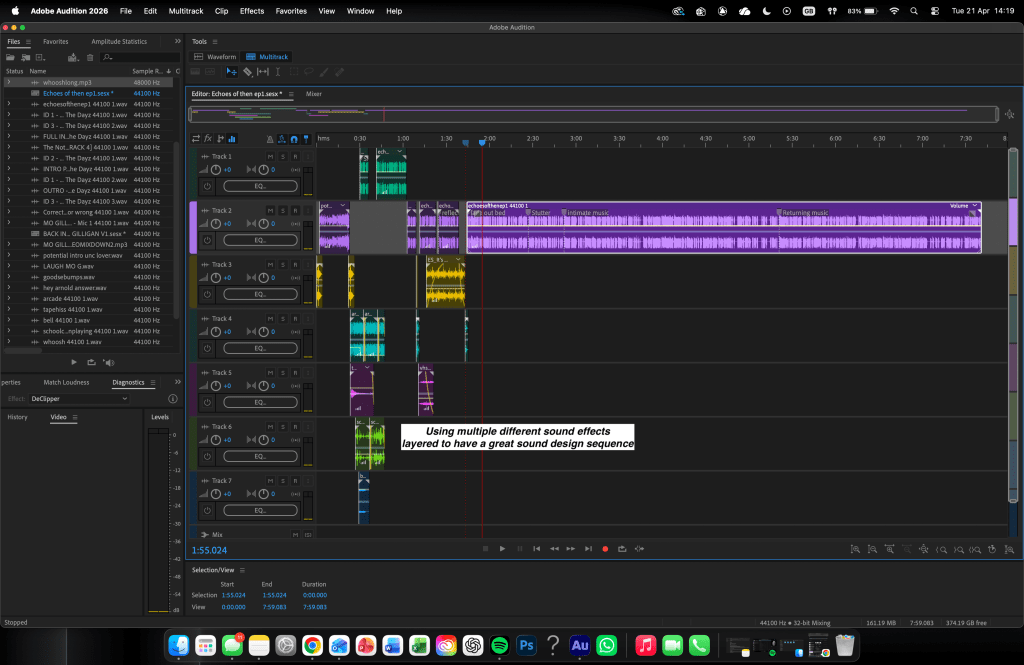
Further more, the recording was done in a sound treated enviroment using an Audio Technica AT2020 paired with a mixing desk being the … I used these as the microphone works very well within a sound treated enviorment and is also very budget friendly, this is in comparison to other mics I could have used such as the Shure SM7B or the Rode Pod Mic.
One of the strongest technical moments during the documentary is the opening sequence of Episode 2 between 0:00 and 1:40. The transition from a calm jazz instrumental to a abrupt glitch which was designed to create discomfort and manipulate the audience. Another strong technical moment within the same episode is shown at 4:07 onwards, Im using risers for a greater impact than the original script intended and the dark layered sfx such as the gaps with a heart beat or the sfx of a radio tuning creates for a great dark atmosphere.
The editing structure of the series is generally smooth and well orginised. Each episode contains a clear behinning, middle and ending rather than simply stopping abruptly. Episode 3, out of time, demonstrates stronger pacing compard to earlier episodes. The slower narration, reduced sound layering and a quieter atmosphere help the episode feel more reflictive and mature. The episode 3 outro as well successfully resolves the trology emotionally by returning to a calmeer tone after the intensity of Episode 2.
However, there are still technical weaknessess throughout the project. As said previously, a noticiable weakness at 9 min 31 secs in episode 2, the music bed underneath is too quiet and looses its power it could have held. This could have been improved through stronger automation and more careful balancing during post production.
Aggressive sound design was intentional in episode 2 however there were moments where it was un needed. This particularly affect clarity during some transitional sections where multiple FX occupy similar low-mid frequencies. To improve I could reduce some layers or using more precise EQ balancing, it would improve vocal clarity while still maintaing the intended atmosphere.
Part 3 – Peer Feedback Analysis
Peer feedback throughout the production process was highly valuable because it confirmed which creative decisions were successful while also highlighting areas for improvment.
The first major bit of peer feedback I performed was creating a focus group of individuals within my primairy target audience to select the best fitting music bed for the beginning of episode one, to ensure an introduction of the nostalgia background. I gave them 3 different tracks with my VO over it to have an even more accurate answer, after collecting all of the data I ended up with a an answer that I did agree with. Which was the second one.
The three tracks I gave are shown below.
One recurring comment from listeneres was that the documentary felt “professional” and “made them think” which is excactly what I was aiming for the make sure I had the audience thinking about their own past and remembering memories that made them feel good. This largley suggests that the overall project was successful by matching the target audience and the overall yone and atmospghwre connect efgfectivley with listeners. I believe this was largley due to the careful use of nostalgic textures, ambient music and structured pacing throughout the trilogy and the stand alone episode.
Another form of peer feedback was getting direct feedback from a peer of mine who suggested some changes from my trilogy, notes were written down to help me improve directly and reassure me on some positive thinga that I did so I dont fix what is not broke.
The notes are written as they follow and an attachment of the written notes are provided.
- Adapt the script on Episode 2 as it is too repetitive.
- The ending on all of the episodes were great and its a bonus they were copyright and royalty free.
- All of the introductions linked back to the main theme of the overall project
- Some parts of the music beds were louder than the voice over.
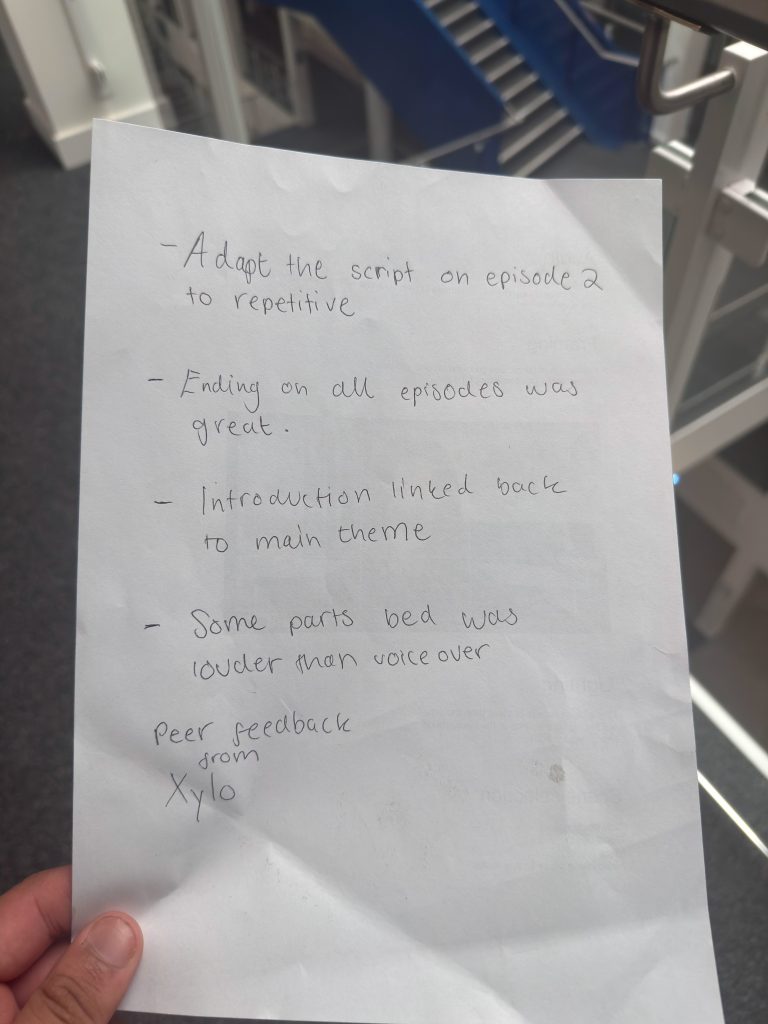
With this mind I successfully adapted and made changes where neccacary alongside that I located some mistakes that were not picked up to ensure my final product was as perfect as it could be.
Another common criticism was that some of the glitch effects in Episode 2 felt excessive. This was also where there were there was some disagreement between listeners. Some listeners described the aggressive sound design as a very creative aspect of the documentary, others felt the glitches distracted slightly from the narration. This sugessts to me that that sound design succeeded creativley in creating tension and discomfort although some effects may have pushed slightly too far in terms of balance and clarity. Personally, I still believe the hevier sound design was necessary to make epsidoe 2 feel intentionally uncomfortable and structurally different from episode one, although I agree reduscing layers could improve overall clarity.
Overall, the responses confirmed that the pacing, atmosphere and sound design were the strongest aspects of the series, while also helping identify weaknesses in scripting repetition and mix balance that I had already begun to recognise myself during editing.
Part 4 – What I would do differently
If I was to remake echoes of then from the beginning, the main improvement I would make during pre production would be developing more detailed scritpting and sound design planning before entering the recording and editing stage of my work. The work expanded creativley throughout the duration of the project, a large amount of experimentation took place during post production rather than being fully planned before hand. This unfortanetly resulted in some sections, becoming slightly repetitive structurally. Creating more refined scripts and planning stages while editing would improve the overall project massivley.
In terms of recording, I could have spent more time expermeting with vocal delivery and recording multiple different tone variations of certain lines nefore beginning the edit. Although my vocals remain cleat and controlled throigh the series there are moments where my pronounciation is not 100% clear and leans more into the “this is scripted” without that “conversational” tone I was aiming for.
The largest imrpovement I would make during the editing process would be to balance the density within the sound design, particularly in episode 2. Although the aggressive tone is what I was aiming for, as it reinforced the themes of manipulation and discomfort. There are moments where the sound effects compete too heavily with the narration. More careful automation, EQ seperation and dynamic balancing would improve clarity while still maintaing the intended atmosphere.
Overall, this project taught me a great deal about documentary and audio production and sound design. At the start of Unit 8, I understood the technical basics of editing and vocal processing, however I did not fully undersyand how sound tself could activley shape audience emotion, pacing and perception. Through the prokect I developed a much stronger atmosphere, narritive structure and emotional sound design. Most importantly I learnt how powerful contrast can be within audio storytelling, paricularly through tonal progression from reflective, to aggressive, to reflective again across three episodes.
Below are the platformed final projects of all episodes that were made:
 Imad Daili - Sports Media