
Context
For this week on my FMP, my main focus was completing the third episode of my project, titling it “out of time.” The episode was again targeted towards an audience of 16-23 year olds with a secondary audience of 26-33 year olds. The episode was designed to act as the conclusion to the three part documentary, bringing together the emotional themes of episode one and the more analytical themes of episode into a final reflective piece.
The aim was to provide clarity around the idea of nostalgia, explaining war the feeling actually is and why memories often feel more meaningful after a time has passed. I also needed to subtly integrate a sporting influence into the episode without changing the core theme of the project
Research
Story
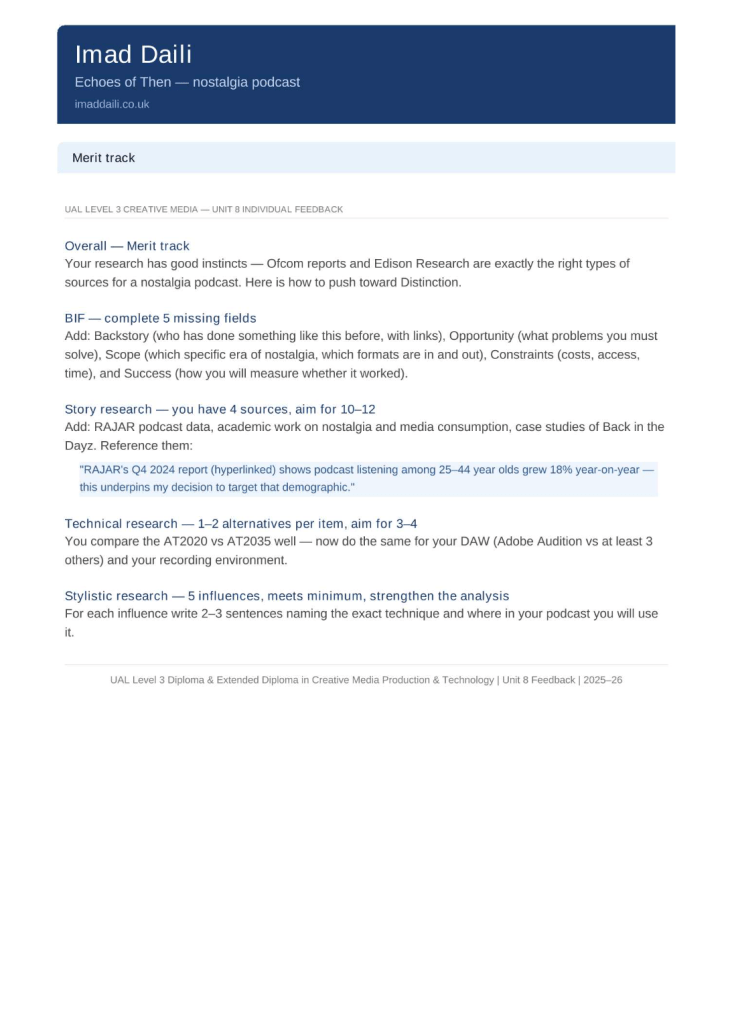
The main focus this week was developing the script structure for the final episode making sure it acted as a real conclusion to the series. Another focus was after recieiving feedback on my research section of my amp and had to adapt the context section and the main research section tpp.
I also developed real life examples throughout the script to make the concepts feel more relatable and grounded. Using football, basketball and live match experiences allowed the spiked to subtly connect back to sport while still remaining focused on nostalgia and memory.
Stylistic
Stylistically I was more inclined to take the ideas from other audio documentary titled, “The story of the Nike in football, which is linked below. This was to further evoke that sporting imagery within the episode and how much of anything especially sports can be nostalgic.
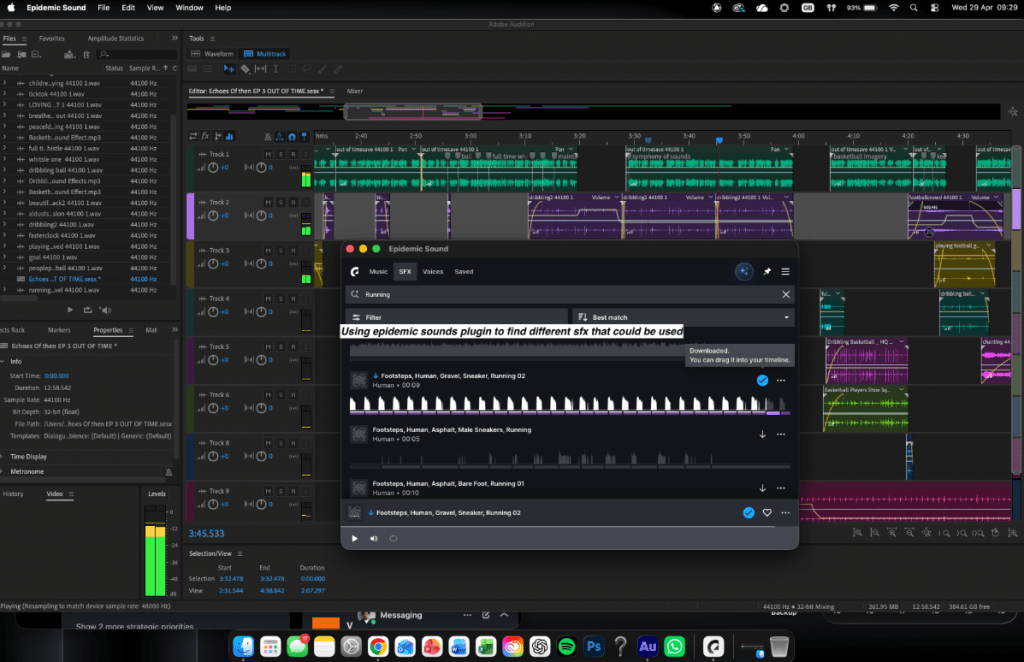
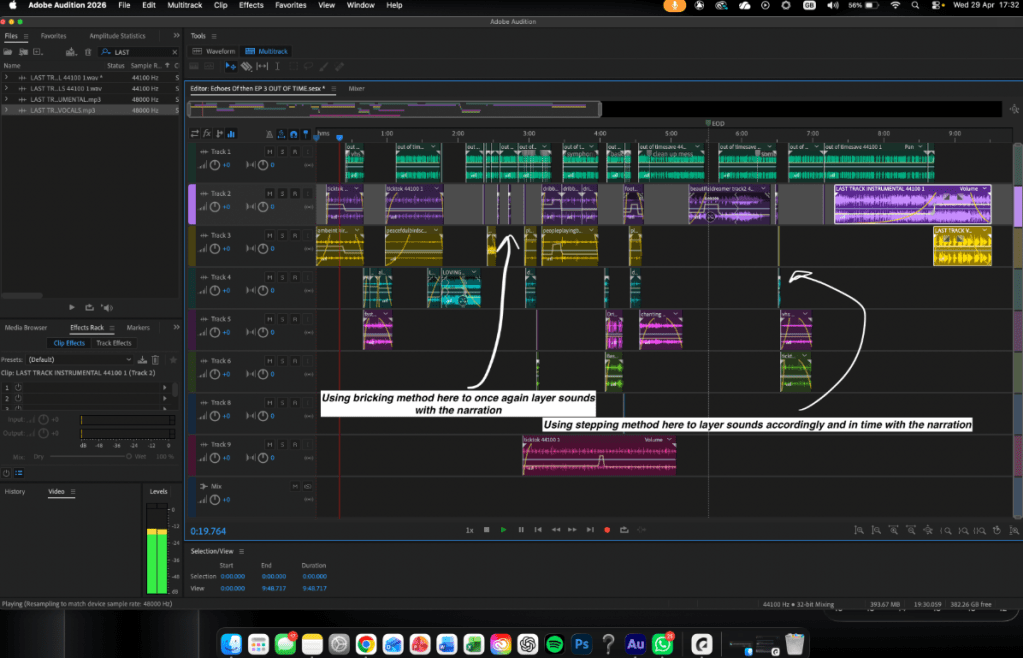
I needed episode 3 to feel calm and grounded, this is in comparison to the darker tones of episode 2 and the warm and reflective idea of episode one. The sound design in the episode relied on creating a very calm environment with some birds chirping but also relating the episode to time hence the clock ticking at all times.
Technical
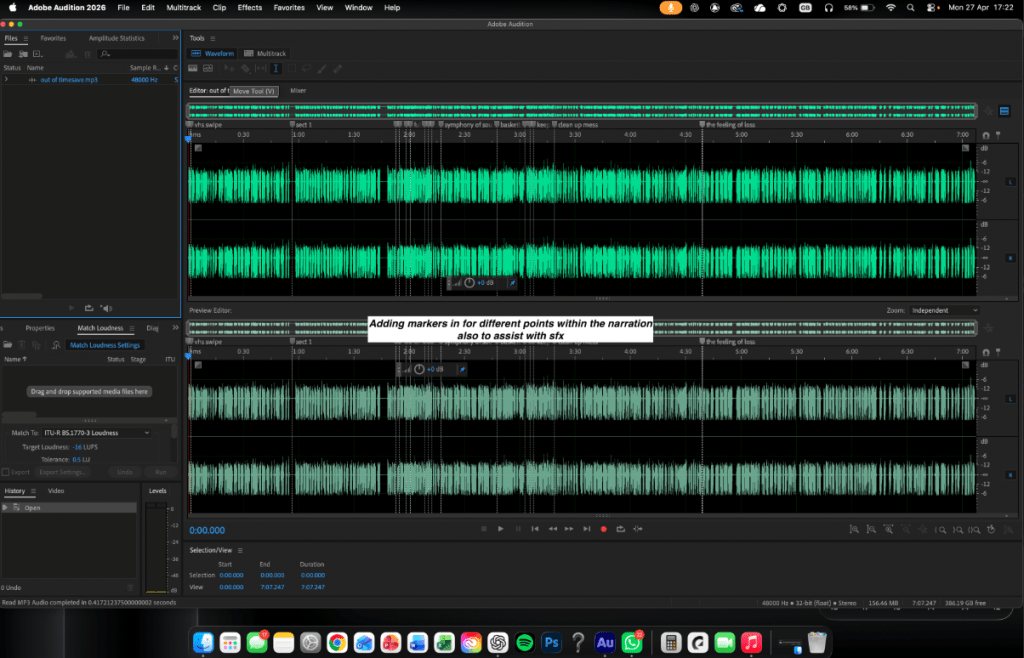
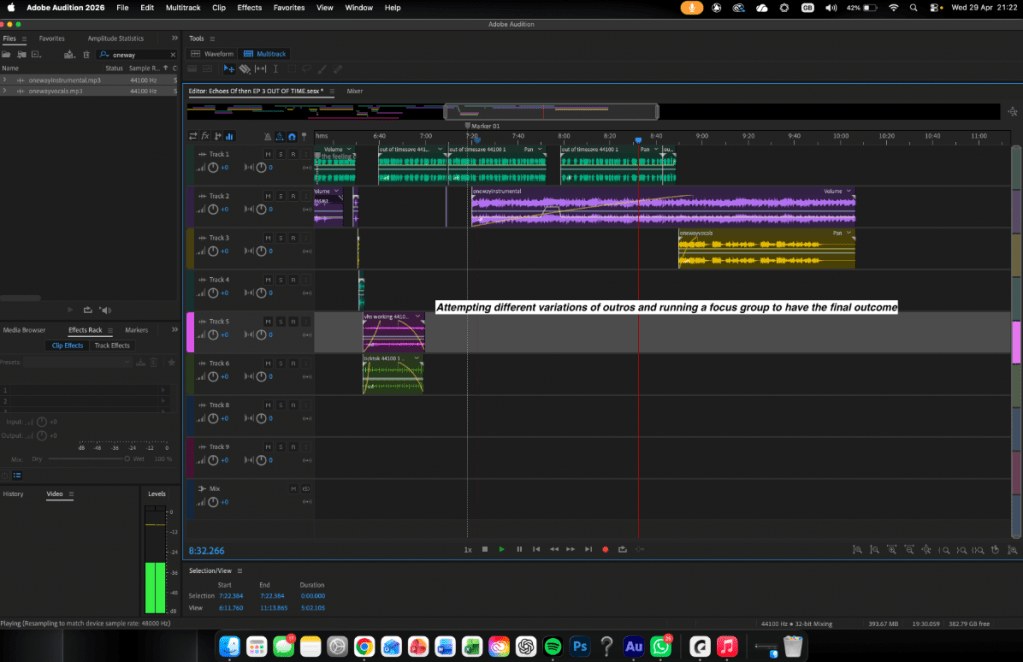
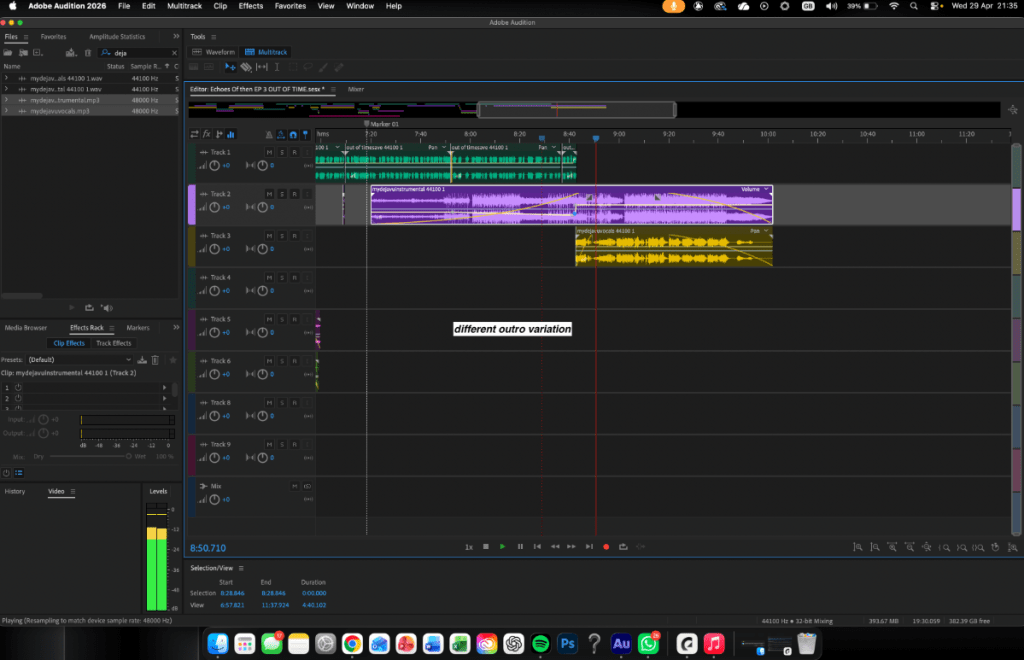
The technical focus was to refine my pace as said in the last weeks EBI, narration and atmosphere to create a polished outro to the series. The narration was recorded in a treated environment with an AT2020 and edited using Adobe audition on a MacBook Pro M2.
I further used my vocal chain within the edit to have refined vocals and maintain consistency throughout the episodes. Such as:
- Parametric EQ
- Dynamics Processing
- Multiband Compressor
- Hard Limiter
- De-Esser
Practical Skills
This week’s practical skills were based around scripting, recording and editing the final episode of the documentary series. A major focus was making sure the final episode felt like a conclusion rather than just another instalment.
I experimented more with pacing and silence, allowing certain sections to breathe rather than constantly layering sound effects underneath the narration. I also developed stronger scripting techniques by using real-life examples and metaphors to explain more complex ideas around nostalgia and perspective.
Evaluation and Reflection
What Went Well (WWW)
1. The final episode successfully concluded the series.
Episode 3 brought together the emotional and analytical themes explored throughout the project and provided a clear ending to the documentary series.
2. The sporting examples felt natural and subtle.
Using football, basketball and live match experiences helped connect the project slightly back to sport without distracting from the main topic of nostalgia and memory.
3. The pacing and atmosphere were more controlled and mature.
The slower pacing, softer sound design and use of silence helped the episode feel more reflective and polished compared to earlier episodes.
⸻
Even Better If (EBI)
1. Some sections of narration could still be shortened slightly.
Although the reflective pacing worked well, a few sections could be made more concise to improve overall flow and maintain engagement.
2. More experimentation with ambient sound could improve immersion further.
While the atmosphere worked effectively overall, adding a wider range of subtle ambient textures could help make certain moments feel even more immersive.
3. The editing workflow could be prepared earlier.
Preparing more sound assets and music choices before editing would help make the post-production process faster and more efficient in future projects.

 Imad Daili - Sports Media