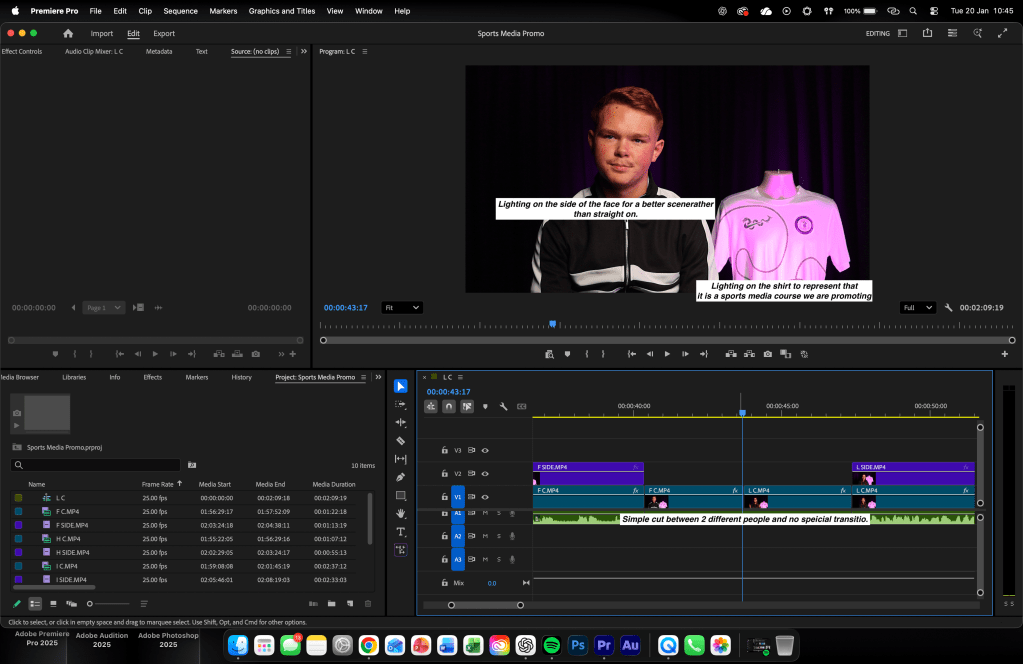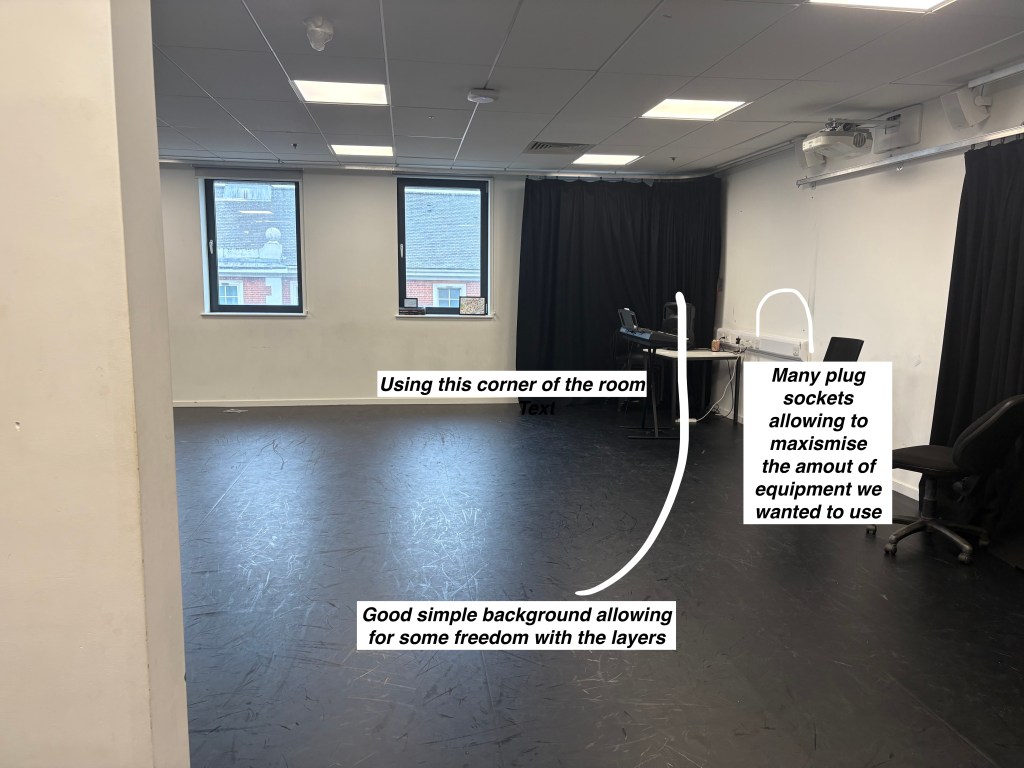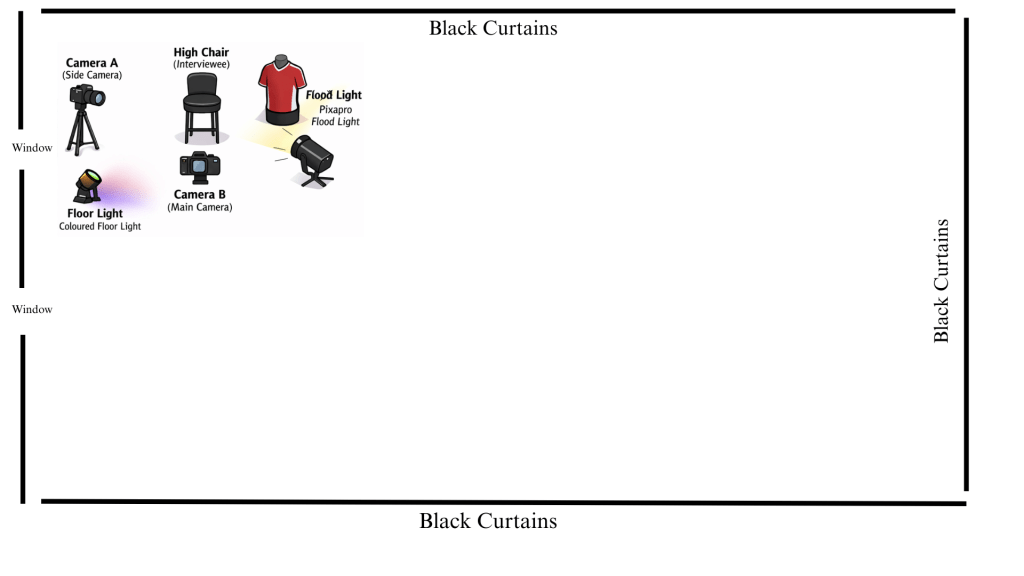
Week 11 – The documentary roundup

Context

In this week I will be detailing the process of creating both of the documentaries. Again I aimed both documentaries to target them all at around 15 – 30 years old individuals no matter what gender, I also aimed them to target people who did have an interest in sports. The main idea of the documentary was purley just to make sure I create an informative documentary yet with good sound design to maintain the listeners ear and keep them entertained throughout the entire documentaries.

Research

Story

For this documentary I wanted to inform and entertain, I did this by making sure in both documentaries. One question was answered.

How can I maintain interest through 10 mins of talking?

I was able to do that by finding out that the general public of sports fans are generally interested in the back doors of the sports industry, how did the rise of basketball come about? How did it fall and come back all within years? Also along with the price to watch football I wanted to look at problwms football watching fans may have just like, why do they have to pay so much just to watch the game?

The Revival of British Basketball

For this one I started with how I could tell the story, from what angle. So I started looking at teams to tell the story from and the London Lions stuck out as I already had media accreditation there so I could gather an insight and within east london was the copper box arena that played a large influence towards the revival of british basketball.

From this I looked at the rise of the lions looking at their record breaking first game in 2013 all the way to where they are now. And as the Lions rose so did the british basketball scene as a whole. So using the Lipns as a lens to look through while telling the revival of the sport in britian was a good choice to make.

The Price to Watch Football.

In this documentary, I wanted to aim to tell an untold sotry within sport, something that is not loooked at enough or paid enough attentnion towards. And that was how much it costs to watch football in 2025. The idea I wanted to go towards with was effectivley inclducing case studies of different problems the sport has had within the tv distrubution rights. Looking at the tv rights deal problems in Ligue 1 coupled with having to now watch the Champions league on 2 different applications. All the way to the MLS putting their entire legaue behind apple tv and still bringing low quality.

Taking a generic problem and making sure it is given a problem and its spoken about on a platform online proved to be useful as I was able to craft a good story from it.

Stylistic

Stylistically, I was inspired by The Boot Room podcast, especially their episode The Story of Nike in Football again. Again I wanted to imitate their conversational informative style coupled with adding in relevant clips/interviews with figures within the industry.

Also their “Sports Science in the 1980s” proved to be useful in terms of telling the background of different things as well

Practical skills

Throughout the entire time I strengthened my long-form storytelling and multitrack editing skills inside Adobe Audition.

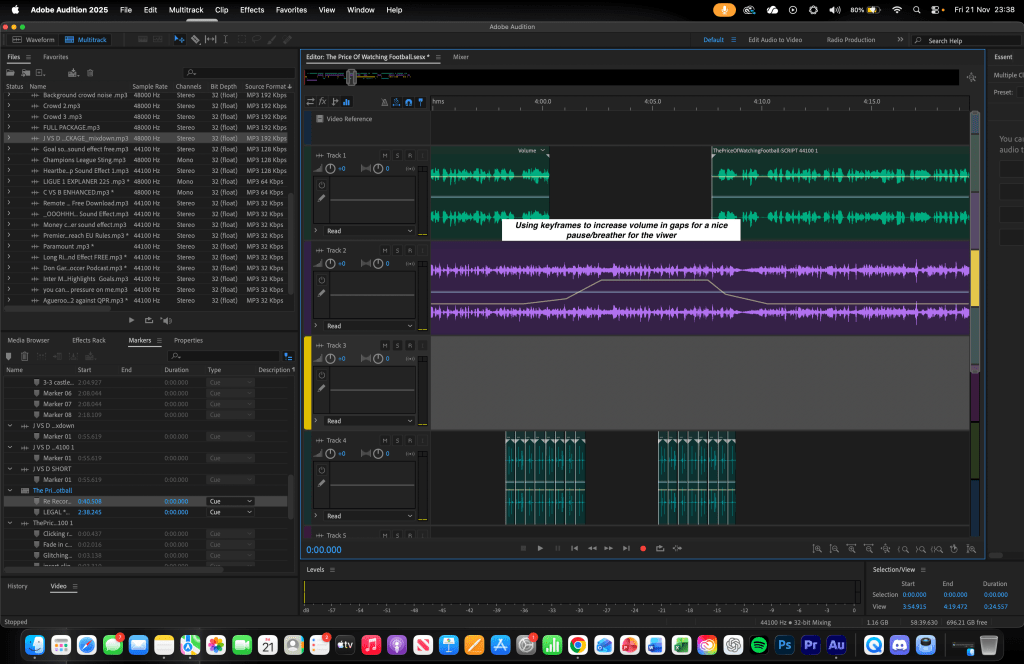
I organised my session using stepping to keep different layers of audio clearly separated, and used bricking to tidy up the final section of the timeline so everything hit its cue points. I added and labelled markers throughout the waveform to plan where interviews, SFX and music beds would enter or fade, which made it easier to jump back and fix mistakes or re-record certain lines.

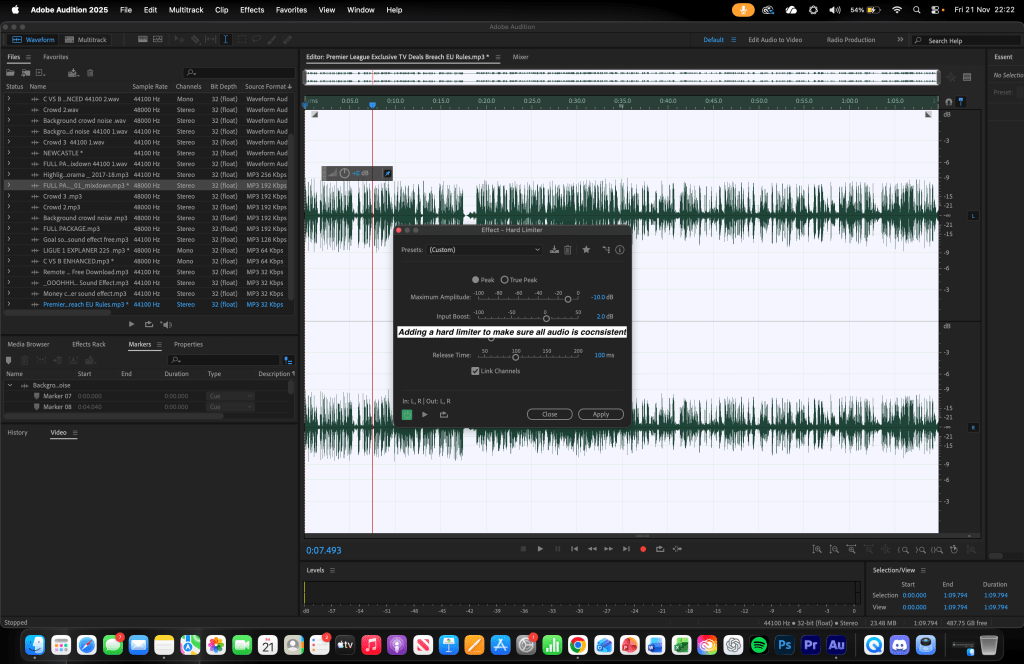
I applied a Classic Soft Knee dynamics preset and used a Hard Limiter. I trimmed breaths, long pauses and repeated words as well.

All screenshots are annotated and shown below.

Technical

For this project, I used Adobe Audition as my main editing software to record, mix and finalise the documentary. My voiceover was recorded on an Audio-Technica microphone in a sound-treated room to ensure clean, consistent audio without background noise. I used Audition’s multitrack view to layer narration, interviews, SFX and music beds, applying fades, volume automation and panning where necessary to create a balanced stereo image. All recording, editing and exporting were completed on my MacBook Pro M2, which allowed smooth playback even with multiple high-quality audio tracks. I exported a final mastered version suitable for streaming platforms.

Evaluation and Reflection

WWW (What Went Well)

Strong Narritive Structure

It was a great peice to work on as the subject I chose was interesting and unique.

Improved Vocal Quality

Using dynamics processing and a hard limiter gave my narration a professional, broadcast-ready sound. My levels stayed consistent across the full 8 minutes, even when moving between quieter reflective moments and high-energy sections.

Much Better Pacing

Making many revisions to the project in 3 different mixdowns recieving feedback from my teacher and peers to have a great final product

EBI (Even Better If)

Time Taken


Many basic mistakes were made during this project hence it took longer to produce.

Week 10 -Second Audio Documentary


Context

This week I used Adobe Audition to create another audio documentary titled The Price to Watch Football. My target audience was again 15–30 year olds with a male orientated skew with a great football interest. Also I aimed to target my audience who ejoy listenting to long form audio cotnent to inform them and maintain interest within it. The main goal was to create an informative audio documentary detailing the issues with tv rights deals within the football media industry and how it can kill bank accounts by how much needs to be spent to watch the game.

Research

Story

Again I for this documentary I set out to answer a question

Why is football tv rights pie divided into so many small slices and who is it affecting?

To do this I researched statistics and examples of many different examples of this. Such as the TV rights disaster within the French league which almost caused the same league to fall into disaster, I also looked at the TV mountain that the premier league has been able to pick up however relying on it too much could cause major problems and finally looking at the MLS who keep there league behind a paywall with apple which lowers there viewer engagement as less people will choose to play to watch the MLS.

I also gathered factual context and quotes from interviews and reportage so I could back up my points with reliable information rather than just opinion.

Stylistic

Stylistically, I was inspired by The Boot Room podcast, especially their episode The Story of Nike in Football again. Again I wanted to imitate their conversational informative style coupled with adding in relevant clips/interviews with figures within the industry. Within the documentary I also expermentied with a radio channell change sound effect to identify the transition onto a new subject for the listener which allowed for great sound desiging with SFX by layering them.

Practical Skills

This week, I strengthened my long-form storytelling and multitrack editing skills inside Adobe Audition. I organised my session using stepping to keep different layers of audio clearly separated, and used bricking to tidy up the final section of the timeline so everything hit its cue points. I added and labelled markers throughout the waveform to plan where interviews, SFX and music beds would enter or fade, which made it easier to jump back and fix mistakes or re-record certain lines.

I applied a Classic Soft Knee dynamics preset and used a Hard Limiter. I trimmed breaths, long pauses and repeated words as well.

I then layered elements such as the crowd nosiethe radio transition sound [switching radio stations]  under key story beats and subject changes to emphasise momentum and create mini-climaxes. Finally, I made several revisions based on feedback from my tutor and peers, exporting different versions and going back into the multitrack to fix missed edits and volume inconsistencies.

Technical

Technical

For this project, I used Adobe Audition as my main editing software to record, mix and finalise the documentary. My voiceover was recorded on an Audio-Technica microphone in a sound-treated room to ensure clean, consistent audio without background noise. I used Audition’s multitrack view to layer narration, interviews, SFX and music beds, applying fades, volume automation and panning where necessary to create a balanced stereo image. All recording, editing and exporting were completed on my MacBook Pro M2, which allowed smooth playback even with multiple high-quality audio tracks. I exported a final mastered version suitable for streaming platforms and potential award submissions.

Evaluation and Reflection

What Went Well (WWW)

Strong narrative structure

It was a great peice to work on as the subject I chose was interesting and unique.

Many attempts

Making many revisions to the project in 3 different mixdowns recieving feedback from my teacher and peers to have a great final product

Better Pacing

In comparison to the other documentary my pacing and diction was far better than the other one.

Even Better If (EBI)

Time Taken

Many basic mistakes were made during this project hence it took longer to produce.

In first revision commentary used under main narration

Commentary was used underneath my first narration and this caused my voice to be battling with the commentators voice not alloing for clear diction.

Further polish automation and transitions

Use more keyframes etc to refine the audio to and even more polished final project

Below is a link to my final product:

Week 9 – Audio Documentary

Context

This week I used Adobe Audition to create an 8-minute audio documentary called The Revival of British Basketball. My target audience was a 15–30 year old, any gender audience with an interest in sport and long-form storytelling, particularly people who enjoy learning more about the culture and business behind sport. My aim was to make an informative but still entertaining documentary that mixed key historical and modern facts about British basketball with engaging storytelling, emotional peaks and clear narrative “climaxes” to keep listeners hooked throughout.

Research

Story

I set out to answer a clear question:

how and why is British basketball having a revival?

To do this I researched the rise, dip and resurgence of the sport in the UK, looking at factors such as the role of the BBL, the London Lions’ recent success, investment in grassroots basketball, and how British players are starting to appear more in European and NBA conversations.

I also gathered factual context and quotes from interviews and reportage so I could back up my points with reliable information rather than just opinion. My script was structured in chapters early popularity, decline, turning points and modern revival so that the audience could follow a clear journey from past to present.

Stylistic

Stylistically, I was inspired by The Boot Room podcast, especially their episode The Story of Nike in Football. I wanted to mirror their balance of conversational tone and detailed storytelling: using scene setting descriptions, key turning points and well-chosen clip moments to build towards emotional climaxes. I also tried to copy their use of beds and SFX to create atmosphere for example, using crowd noise, shoe squeaks and ball-bouncing to place the listener “courtside”, then dropping the bed under more reflective or emotional sections to let the script breathe.

Practical Skills

This week, I strengthened my long-form storytelling and multitrack editing skills inside Adobe Audition. I organised my session using stepping to keep different layers of audio clearly separated, and used bricking to tidy up the final section of the timeline so everything hit its cue points. I added and labelled markers throughout the waveform to plan where interviews, SFX and music beds would enter or fade, which made it easier to jump back and fix mistakes or re-record certain lines.

I started with applying a Classic Soft Knee dynamics preset, and then used a Hard Limiter. I carefully trimmed breaths, long pauses and repeated words.

I then layered elements such as shoe squeaks, dribbling sounds and crowd eruptions under key story beats to emphasise momentum and create mini-climaxes. Finally, I made several revisions based on feedback from my tutor and peers, exporting different versions and going back into the multitrack to fix missed edits and volume inconsistencies.

Technical

Technical

For this project, I used Adobe Audition as my main editing software to record, mix and finalise the documentary. My voiceover was recorded on an Audio-Technica microphone in a sound-treated room to ensure clean, consistent audio without background noise. I used Audition’s multitrack view to layer narration, interviews, SFX and music beds, applying fades, volume automation and panning where necessary to create a balanced stereo image. All recording, editing and exporting were completed on my MacBook Pro M2, which allowed smooth playback even with multiple high-quality audio tracks. I exported a final mastered version suitable for streaming platforms and potential award submissions.

Evaluation and Reflection

What Went Well (WWW)

Strong narrative structure and clear audience focus

I built the documentary around a clear timeline of British basketball’s rise, decline and revival, which made the story easy to follow and relevant for 15–30 year-old listeners who might be new to the sport but interested in wider sports culture.

Effective use of sound design and layering

The stepping and bricking methods, combined with layered SFX like shoe squeaks, ball bounces and crowd eruptions, helped create atmosphere and drive the emotional peaks of the documentary.

Improved vocal quality and consistency

Using dynamics processing and a hard limiter gave my narration a professional, broadcast-ready sound. My levels stayed consistent across the full 8 minutes, even when moving between quieter reflective moments and high-energy sections.

Even Better If (EBI)

Refine pacing and breathing across the full 8 minutes

My pacing could still be slightly fast. Slowing down in key moments and leaving more intentional pauses would help certain facts and emotional beats land more powerfully.

Increase variety in contributors and perspectives

Including an even wider range of voices. For example, more fans, coaches or grassroots organisers would deepen the sense of “revival” and give the listener a more personal connection with the documenatary

Further polish automation and transitions

I could spend more time fine-tuning volume automation on SFX and music beds so every transition feels completely seamless, especially when moving into and out of interview clips or big climactic moments.

Below is a link to my final product:

Week 8 – Sport Roundup

Context

This week we used Adobe Audition creating sport audio packages typically around all different types of entertaining sports. I aimed to create a weekly sport roundup package with engaging information relevant to the listener at the time having the most interesting/popular sport/fixture first and ending with the least popular, I aimed to target this project to a male audience aged 16-40 who have an interest in a variety sport.


Research

Story

I aimed to tell the simple to digest facts of the sport I would be talking about, making sure to add in a clip from a coach/manager/player from the relevant peice I was talking about. This is to make sure that I was telling a engaging fast paced, easy to understand package that lasted 1-1:30 mins long.

Stylistic

I set out to produce a TalkSport-style audio package that included a fast-paced 90-second match-fix roundup. Keeping my script short, sharp and purposeful helped maintain a professional tone and ensured the audio flowed smoothly. Below is an idea of what I was trying to go for.

Practical skills

This week, I continued to develop my efficiency in Adobe Audition, focusing on structuring and delivering a short-form sports audio package to a broadcast-ready standard.

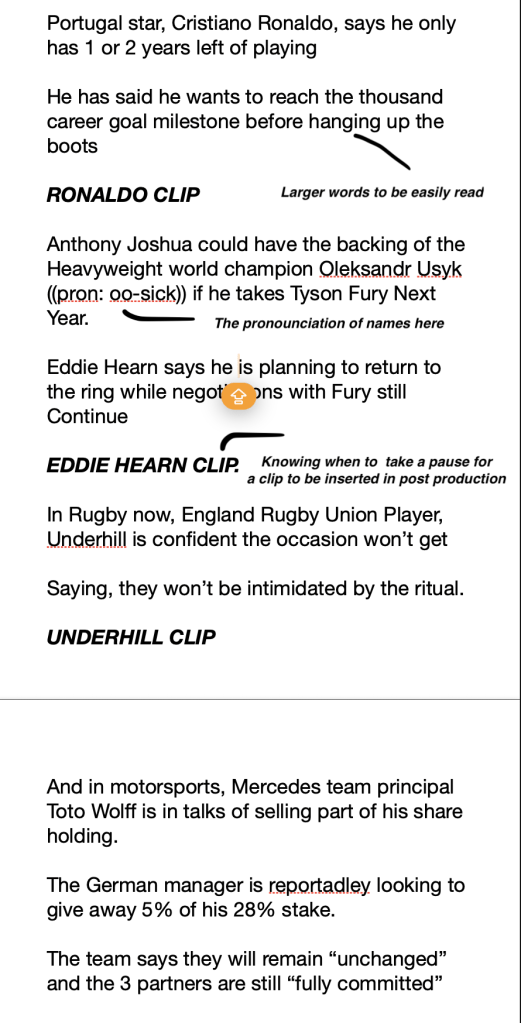
I refined my pacing and diction so the full script fit sounded neat and tidy while still capturing the important moments. I also used editorial judgment to prioritise the most important audio peices (long pauses, uneccacary words) giving major games more depth and summarising matches concisely.

Below I have included an annoted screenshots of one of my scripts and what it looks like:

Technical

For this project, I used Adobe Audition as my main editing software to record, mix, and finalise my package. The software allowed me to layer my voiceover, apply fades, and manage levels with precision. I recorded my voice using an Audio-Technica microphone inside an already sound-treated radio studio, ensuring clean and consistent broadcast quality audio. All editing and exports were completed on a MacBook Pro M2, which provided smooth playback and reliable rendering when finalising both the dry and bedded versions of the package.

Evaluation and Reflection

What Went Well (WWW)

1. Clear editorial structure and audience focus
You organised your sports roundup logically, starting with the most popular fixtures and ending with the least, which kept the package relevant and engaging for your target male 16–40 audience.

2. Strong delivery and pacing
Your pacing, diction and scriptwriting were refined, allowing you to deliver sharp, well-timed commentary that fit naturally into the 90-second TalkSport-style format.

3. Time Taken
I was able to mkae this along with others in quick succession. Being already skilled at VO and Audition Editing.

Even Better If (EBI)

1. Pacing and Delivery
Pacing could be better as at times I was told I was speaking too fast and not clearly enough, My diction could use work as well as some words were mispronounced leading them to be unclear.

2. Broaden story diversity
I could include a wider mix of sports or more international fixtures to appeal to a slightly broader audience and keep the roundup feeling fresh each week.

3. Further refine clip integration
Experimenting more with timing, EQ, or automation on manager/player/coach clips could make them blend even more seamlessly with my voiceover and improve overall cohesion.

Below is a link to my final product

Week 7 – Basic Football Package


Context

This week we came back to adobe audition creating basic football packages, I aimed to create a champions league match day highlight package detailing all of the relevant information within it, This time I aimed to target this project to a male skew with people aged 16-40 with a great interest in watching the champions league rather than standard priemer league games.

The source material is attached below:


Research

Story

The story I aimed to encapture was to detail efficently a rundown of the most recent champions league games to effectivley detail the scoreline and important events, such as Trent Alexander Arnold returing to anfield and being met with boos. I also aimed to order the importance of the games by making sure I talk about the biggest game first which was, Liverpool vs Real Madrid, then going forward to talk about smaller games. This matched up with my fast paced enganging script to the target audience I was aiming for.

Stylistic

I aimed to create a proffesional 90 second match fix which encaptured all of the important games in a succint manner that allowed to be easily understandable by many. Creating my own script from the games allowed me to be creative with the words and remain proffessional. Below I have attached the final product with a Bed which was already unedited by somebody else, and another is a dry version, with no bed, by me with my own writing etc.

Practical Skills

This week, I further developed my ability to work efficiently in Adobe Audition, focusing on structuring and delivering a short-form audio sports package to a broadcast standard. I practiced scripting and voicing sports highlights with clarity and energy, ensuring my tone matched the enthusiasm of Champions League coverage. This also helped refine my pacing and diction to fit the 90-second limit without losing key information. I applied editorial judgment when deciding which stories to prioritise, ensuring the biggest fixtures received more coverage while smaller matches were summarised effectively. This exercise strengthened my ability to write for the ear, adapting written material into engaging spoken content suitable for my target audience of 16–40-year-old male football fans.

Technical

For this project, I used Adobe Audition as the main editing software to record, mix and finalise my Champions League highlight package. The software allowed me to layer my voiceover, apply fades, and manage levels with precision. I recorded my voice using a RØDE NT1-A condenser microphone connected through a Focusrite Scarlett audio interface, which provided a clean, professional sound quality ideal for broadcast. Headphones were used throughout to monitor levels and ensure there was no clipping or background noise. All editing and exports were completed on a Macbook pro M2 ensuring smooth playback and reliable rendering when finalising both the dry and bedded versions of the package.

Evaluation and Reflection

What Went Well (WWW)

  • Professional script and delivery – My narration sounded confident, clear, and well-paced, matching the tone of official Champions League coverage.
  • Prioritising key stories – Starting with Liverpool vs Real Madrid created a strong opening and kept the rundown engaging and relevant.
  • Use of Adobe Audition tools – I efficiently used fades, normalisation, and level balancing to ensure the mix was clean and consistent. Such as using the hard limiter to limit the peaks and lows and the classic soft knee

Even Better If (EBI)

  • Include more production elements – Adding subtle crowd noise or stingers between matches could make the segment feel more dynamic.
  • Adjust EQ and compression – Fine tuning these settings would help the voiceover sit even more naturally over the music bed.
  • Refine vocal tone variation – Experimenting with energy and emphasis could make the delivery sound more like live radio presentation.

Week 6 – Adding my own Commentary

Context

This week we continued working with Adobe Premiere Pro, but also incorporated Adobe Audition to combine video and audio editing skills. For this week’s project, I worked on creating a “spoof” version of the Athletico Madrid vs Real Madrid highlights. The goal was to add my own commentary over the clips while maintaining professional presentation standards and ensuring the flow of the match remained engaging. The target audience remained male-skewed, aged 14–40, and the focus was on telling a clear story of kickoff, goals, notable moments, and full time with replays.

The source material included the original Premier Sports edit and additional live feed clips without commentary shown below.


Research

Story

The story I aimed to tell this week involved recreating the narrative of the game while adding my own commentary over the original footage. I ensured the key moments kickoff, goals, and full time were highlighted clearly. While maintaining the quality “spoof” effect. I carefully layered my commentary to match the timing of the game, making sure to avoid cutting off any natural audio from the original footage unnecessarily, and added crowd noise in sections to maintain atmosphere and blend in commentary seamlessley.

Stylistic

The style I aimed for this week was a professional commentary session. I focused on delivering commentary in a clear and energetic manner while maintaining a natural flow that aligned with the match. By adding in my own commentary from the original with my own lines, I was able to craft a coherent, entertaining edit that kept viewers engaged. Crowd noise was added strategically to maintain realism, which is shown in the screenshots below, and the pacing of my delivery was matched to the intensity of the game. The overall goal was to produce an edit that was entertaining, polished, and easy to follow, while showing creative flair.


Technical

This week, I explored the use of a lip microphone to record my own commentary, which allowed for clearer, more professional audio capture. I continued using Adobe Premiere Pro for video editing and Adobe Audition for audio layering and enhancements. Using the lip mic, I was able to record clean voiceovers directly into Audition, reducing background noise and improving clarity. My MacBook Pro M2 handled the combined workload efficiently, allowing me to switch between multitrack audio editing and video timeline work without lag.


Practical Skills

Several tools in Adobe Audition and Premiere Pro were used to achieve the final edit:

  • Razor Tool & Markers – I used the razor tool to cut sections of the original commentary and place my spoof lines precisely. Markers helped identify key moments for my comedic insertions and crowd noise.
  • Multitrack Sessions – I layered my commentary with multiple crowd noise tracks, using fade-ins and fade-outs to make the transitions smoother and maintain a dynamic atmosphere.
  • Lip Microphone Recording – Recording directly with a lip mic ensured clear, professional commentary and allowed for better timing alignment with the video clips.
  • Layering & Volume Control – I adjusted volume levels across tracks to balance the original crowd noise with my own commentary, keeping the overall mix clear and engaging.

Evaluation and Reflection

What Went Well (WWW)

  • Effective recording with lip microphone – My commentary came through clearly, making the spoof more professional and engaging.
  • Layering of audio – Combining crowd noise, original commentary, and my voiceover resulted in a clean and immersive final edit.
  • Timing and placement of spoof lines – Using markers ensured my commentary matched the action on-screen perfectly.

Even Better If (EBI)

  • Apply EQ and compression – This would have helped balance my commentary with existing crowd noise and original audio more effectively.
  • Use automation for volume control – Adding keyframes could enhance certain comedic moments or game highlights for stronger impact.
  • Time management – Spending slightly more time refining transitions and layering could make the final edit even smoother.
  • Experiment with additional sound effects – Incorporating subtle SFX could further enhance the comedic effect of the spoof.

Weekly Log 5 – Understanding Premier Pro

Context

This week we continued still with premier pro however this time combining the 2 adobe applications, being premier pro and adobe audition. For this weeks project we worked on re-editing the highlights of Athletico Madrid vs Real Madrid made by premier football. We were going to rework the audio as the commentators voice kept on getting faded out along with unnecessary comments as well. We wanted to aim this piece to a male skewed audience with a age range of 14-40, to tell a story of kickoff, goals and full time with replays in between. We aimed to replicate professional sports media presentation standards coupled with expanding our knowledge as well developing our skills in this field.

The source material was the original Priemer Sports edit and another live feed replay with no comms.


Research

Story

The story I wanted to tell was to simply have kickoff, goals along with replays and full time as well, coupled with different notable moments in the game too. We altered the audio of the edit and not the video adding in crowd noise within the cuts that I made. I wanted to make it similar to a much higher quality video edit by taking ideas from the video shown below making sure not to fade any words but only crowd noise when changing clips.


Stylistic

The editing style I aimed to achieve focused on maintaining clarity and professionalism throughout the final video. I ensured that no words from the commentator were cut off or faded out prematurely, preserving the natural flow and rhythm of the match commentary. This helped maintain viewer engagement and ensured that the narrative of the game remained coherent from start to finish. Additionally, any unnecessary or irrelevant remarks made during the recording were carefully removed and replaced with authentic crowd noise to maintain continuity and atmosphere. The overall goal was to produce a clean, seamless, and easy-to-follow highlight package that reflected professional broadcast standards while keeping the focus on the key moments of the match.

Technical

I explored different hardware options for audio editing in Adobe Audition and found that my current MacBook Pro M2 offers more than enough power to run the software smoothly. For video editing, I decided to use Adobe Premiere Pro instead of other programs, as it enables me to transform simple ideas into professional, high quality edits.


Practical Skills

We made use of several tools in Adobe Audition, but the ones we relied on most were the razor tool and marker placements. The razor tool allowed me to precisely cut sections of audio, removing unwanted commentary while keeping the natural flow of the match intact. Markers were used to identify key points where sound effects (SFX) such as crowd noise could be added, helping to enhance the realism of the edit.

I also worked in a multitrack session to layer different audio clips, including multiple crowd noise tracks. By doubling up and using fade-ins and fade-outs, I was able to create smoother transitions and build intensity where needed. These techniques ensured the final edit sounded clean, dynamic, and engaging perfectly matching the energetic tone expected by the target audience.


Evaluation and Reflection

What Went Well (WWW)

  • Effective use of the razor tool – I accurately cut out unnecessary commentary sections without disrupting the flow of the audio, maintaining a smooth and professional edit.
  • Layering and blending of crowd noise – By doubling up and fading crowd sound effects, I successfully created a realistic and immersive atmosphere that matched the energy of the footage.
  • Strategic use of markers – Placing markers to identify points where additional sound effects could be added helped me stay organised and made the editing process more efficient.

Even Better If (EBI)

  • Use different FX in audition – Things like EQ and compression could been used as this would have helped balance levels between commentary and crowd noise, ensuring a more polished final mix. And any others.
  • Used automation correctly for control – Using automation by adding keyframes I could make subtle volume adjustments that could make certain moments stand out more clearly and improve overall clarity.
  • Improving the speed of the edit – Managing my time more efficiently to create a higher quality edit in much shorter time.

Below is all of the platformed videos

Weekly Log 4 – Premier Pro Video Highlights

Context

During this week we began with learning basic video editing highlights for football matches, understanding the importance of following a style guide and applying basic edits. We layed it out as a kick off, goals and full time style in the edit. We also wanted to aim this towards people aged 15-35 with a male skew towards it, making sure to maintain fast paced gameplay and yet maintaing the story of each moment in the match. The match we edited was a single camera game with the U21 Manchester United VS Barnsley in the 23/24 season .


Research

Story

For this we wanted to include all notable moments in the game being the kickoff, all the goals and the full time whistle. This is too maintain an entertaining watch for the view featuring all of the crowd noise and celebrations too to entertain.

Stylistic

We wanted to create a short fast paced edit with short and sharp cuts following the style guide making sure to include a 12 frame cross dissolve between each replay. We wanted to match the idea of some channels like the Official Sky Sports Premier League channel.

Technical
I researched various hardware options suitable for audio editing in Adobe Audition. I currently use a MacBook Pro M2, which provides more than enough power to run the software effectively. For the software itself, I chose Adobe Premier Pro over alternatives because it allows me to take simple ideas and develop them into polished, high quality video edits.


Practical Skills

We learned the basic skills on premier pro understanding how to make a 12 frame cross dissolve to create an engaging seamless transition between each of the goals and such. Ensuring to include the crowd noise and celebrations to make sure it is even more entertaining.


Evaluation and Reflection

What Went Well (WWW)

  • Being able to edit the highlights in quick succession.
  • Understanding the 12 frame cross dissolve efficiently and applying it to the edit.
  • Maintaining a clear structure (kickoff, goals and full time.)

Even Better If (EBI)

  • More variety in camera angles – Using additional camera shots would have made the highlights more dynamic and visually interesting.
  • Quick Succession – Completing the edit more faster than before.
  • Refinement of transitions – Possibly smoother or more creative transitions could enhance the overall polish of the edit.

Below is all of the platformed videos


Weekly Log 3 – Understanding Audition

Context

During this week we focused on the same concept of creating highlights packages for people aged 15-45 with a male skew towards it showing the kickoff, goals and full time. I worked on the Chelsea vs Brighton pre season game and I also worked on my speed with some champions league games like Juventus against Dortmund.

We also had a Classic FM day and for this we created a 2-3:30 long highlights package featuring the best pieces of commentary from the champions league. with classical music in the background tailored for people aged around, 35-50 again with a male skew and for people to listen to classical music.


Research

Story

Again I wanted to represent the interesting moments in the game being the kickoff, goals and full time whistle. This is all because it would become an engaging story for the viewer to engage with and gage a full picture of the game without having to watch the entire match.

For the Classic FM day, featuring all of the most entertaining pieces of commentary, The story I wanted to tell was more to engage the listener and for them to be entertained by the champions league music and the commentary coupled with showing all of the most notable moments from the Champions League match week 1 .


Stylistic

The style I wanted to create for this highlight package was to be short and sharp and only feature goals within it and to be around 2-3 mins long. Typically channels like the Official Sky Sports Premier League channel. More similar to the 4-4 Juventus vs Dortmund game shown below from TNT sports.

What I wanted to create for the classic FM highlight reel was to feature the match week 1 story and also represent the most notable moments of commentary from there. This can be shown here. Or with the video below.


Technical

I researched different pieces of hardware that were suitable for audio editing on Adobe Audition. I have access to a Macbook Pro M2 which is more than enough for adobe audition. In terms of software I used audition in comparison to others as it allows to build on basic ideas and to develop them into great audio clips.


Practical Skills


We made use of several tools in Audition, but the ones we relied on most were the fade-in and fade-out features. These allowed us to create a seamless final package that flowed smoothly and kept the audio engaging for listeners. This directly tied into our target audience, as it helped us produce a fast-paced, captivating highlight reel. In addition, I worked in a multitrack session to incorporate and edit the music, ensuring it fit perfectly with the overall piece.


Evaluation and Reflection

What Went Well (WWW)

  • Being able to edit the highlights in quick succession.
  • Utilising the remix tool instead of looping the music manually.
  • Overlapping 2 pieces of commentary over each other to create a seamless package.

Even Better If (EBI)

  • It would’ve been better if I made the Classic FM highlight package more quickly with more quality.
  • It would’ve been better to save all of my individual packages as a MP3 to save space on my laptop.
  • It would’ve been easier to shorten down the commentary length in some places to only tell the main story of the goal.

Below is the platformed audio clips

Weekly Log 2 – Adobe Audition

Context

This week I began creating a highlight package of a kickoff, goals and full time for a friendly premier league game in the 23/24 season with Newcastle UTD vs Aston Villa in a preseason tournament. I wanted to target this piece towards peopled aged 15 – 45 with a thorough interest in football with a male skew towards it. We created this highlight package on adobe audition using different tools that it has to offer. With a final product to platform it on Spotify for creators.


Research

Story

The story I wanted to tell was to be similar to a highlight package made by the premier league for example: here. Featuring all notable moments in the game typically, kick off, goals and the full time whistle. This is because it will create and engaging story for the viewer for them to have an interest in.


Stylistic

The style I wanted to create for this highlight package was to be short and sharp and only feature goals within it and to be around 2-3 mins long. Typically channels like the Offical Sky Sports Premier League channel. More similar to this video shown below:


Technical

I researched different pieces of hardware that were suitable for audio editing on Adobe Audition. I have access to a Macbook Pro M2 which is more than enough for adobe audition. In terms of software I used audition in comparison to others as it allows to build on basic ideas and to develop them into great audio clips.


What

The research I conducted for my age range was firstly finding out that making a very fast paced highlight package was imperative to keep the younger generation engaged whilst also understanding to understanding to balance it out with enough information to keep an older generation engaged. We researched the specific match that was played and gathered all the accurate information available to us. Alongside this, we studied different editing styles used in official Premier League highlight packages to better understand the elements that make an audio highlight package sound professional. Furthermore, we fully researched different audio editing tools such as, Logic pro x (which is more tailored towards music editing) and adobe audition which is the one that we used. We used Audition as it allows to understand the basics and to build on them with more complex features.


Why

This research allowed us to develop practical editing skills, such as using the fade in and fade out tools within the favourites tab. It also deepened our understanding of why audio only highlight packages are created. We learned that a commentator can effectively capture the story of a goal within a short 15-second clip, making the entire match concise and engaging to listen to.


Practical Skills

We used different tools in audition that we had at our disposal however the one we used the most was most definitely the fade out and fade in tools making sure the final package became a seamless audio file that became engaging for people to listen too. Which linked too the target audience we wanted to target as it assists to create a engaging fast pace highlight reel. I also used a multitrack session to add in and edit the music that we could use as well.


Evaluation and Reflection

What Went Well (WWW)

  • It became easy to understand where and how to find the kick off and all the goals that happened during the game.
  • It was easy to understand how to make a seamless package that was engaging for the listener.
  • Looping specific parts of the music was a good idea as the most impactful moments were coupled with impactful music too.

Even Better If (EBI)

  • It would’ve been even better if I made the package more complicated by adding in different things that happened during the game to fully en-capture the entire story of the match.
  • It could’ve been even better to blend the audio files in even more with the music to get everything 100% aligned.
  • Creating the edit in a shorter amount of time with the same amount if not more quality.

Below is the final platformed product shown.